
By Joseph Jeffery, CSL Chair
I recall my first Ontario Library Association Super Conference and how overwhelming it was compared to the BC Teacher-Librarian Association conferences I was used to. Scaling up from 400-odd attendees to thousands, from just teacher-librarians to the whole library sector and a much larger venue gives a different vibe. With the World Library Information Congress, I was adding in hundreds of different cultures and languages, perspectives from everywhere, in addition to the cross-section of the library information world I was used to. It was an utterly amazing experience that allowed me to connect with others across the globe in a way I never imagined I would be able to. There were so many things to talk about, so to not write a novella, I have focused on a few items to help you get a sense of what I took away.
During the opening ceremony, it struck me that I had never really seen Canadian officials at any library conference. However, there were Korean politicians, from the Mayor of Busan up to the Prime Minister Han Seong-sook and other members of the national assembly welcoming us and talking about the power of libraries. Later that week I attended a session by the Korean School Library Association, where they explained that when WLIC was in Seoul in 2006 there were less than 10 school libraries. Now every school has one and they are trying to get every single one staffed. The politicians saw the power of libraries in supporting students with information and technology and invested heavily as part of the plan to make the Republic of Korea an information superpower and it appears to be paying off.
Jiho Cha, a member of the National Assembly and a global health scholar, gave a fantastic keynote on AI as a universal public right, arguing that the technology should not be governed by technology companies who are profit focused, but instead made a public utility in the same way that electricity or water are. His rationale was that historically we have inherited an unequal intelligence system due to vast differences in access to information, so we need to consider what happens now when information instead becomes intelligence. Universities grew up around knowledge and this pooled expertise at them, depriving others outside the areas with them of the chance to improve their lives through learning. Thus, scarcity in human intelligence has been inherited by generations of people throughout the world. The internet began the work of changing this by digitizing information, but because interpretation, judgement and expertise stayed scarce, we instead created the ability for information overload and misinformation to grow. AI now offers the chance to fix this inequality of expertise. Imagine a rural clinic suddenly able to diagnose complex problems that would have taken a specialist, or a municipal water plant being able to access engineering judgements, or a citizen in poverty able to get legal advice. AI provides the ability for the expertise to travel to the need, rather than the opposite way around. However, when all this is locked behind paywalls, we risk a cognitive divide deeper than before with data, authority and computational power only available to the wealthy. The next issue is if expertise is everywhere, then what is the worth of a mind that markets no longer price? Doctors, lawyers and engineers are amongst the most highly paid because that expertise is priced accordingly. We have to rethink how intellectual dignity works in the AI age and it needs to move away from purely economic gain and rest instead on something intrinsically deeper. Finally, with AI increasingly the interface with which people interact with knowledge, we risk whoever curates this intelligence coming to curate reality more so than even in the social media age. And who would be the public body to support a public AI? Libraries.
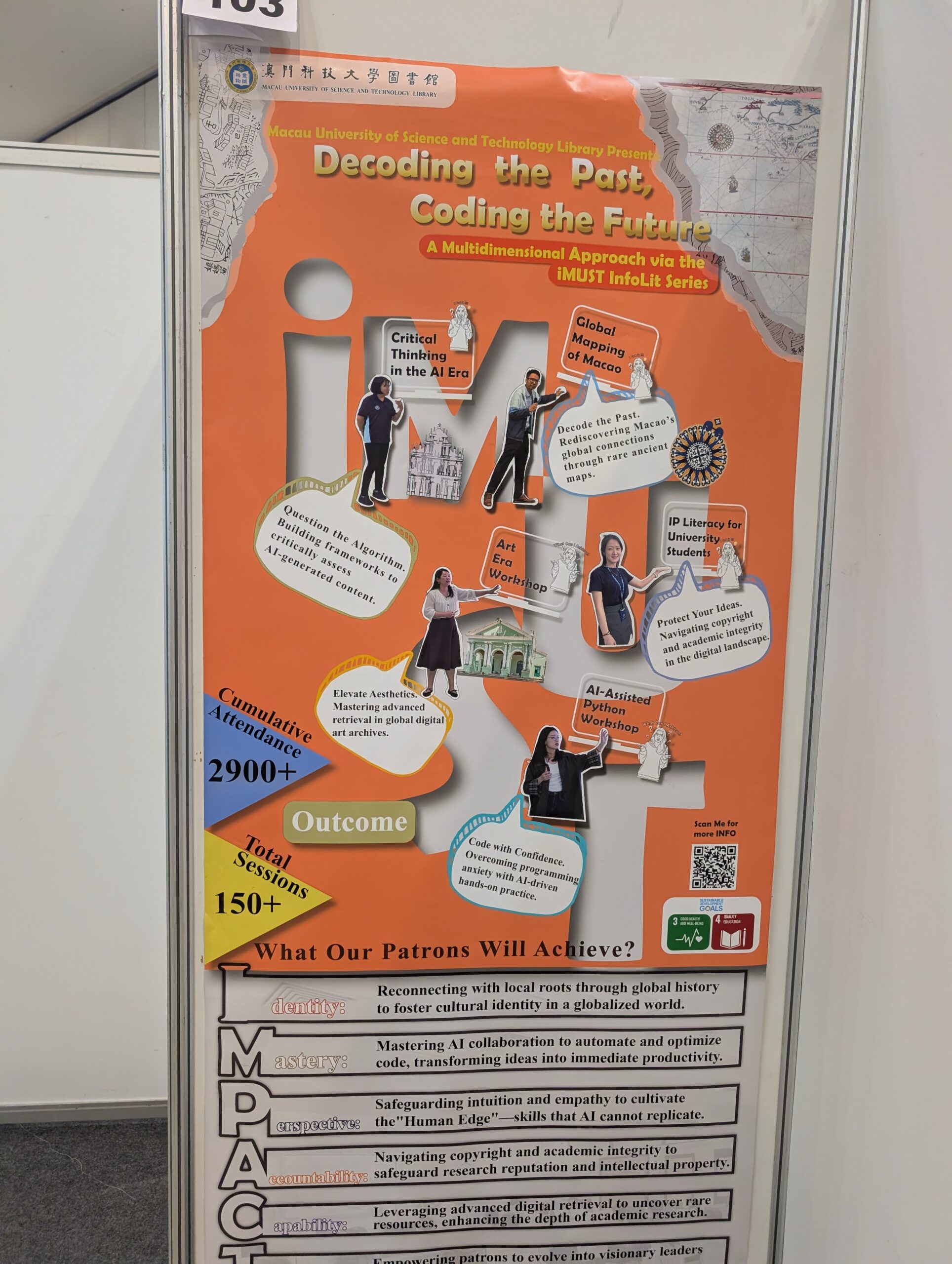
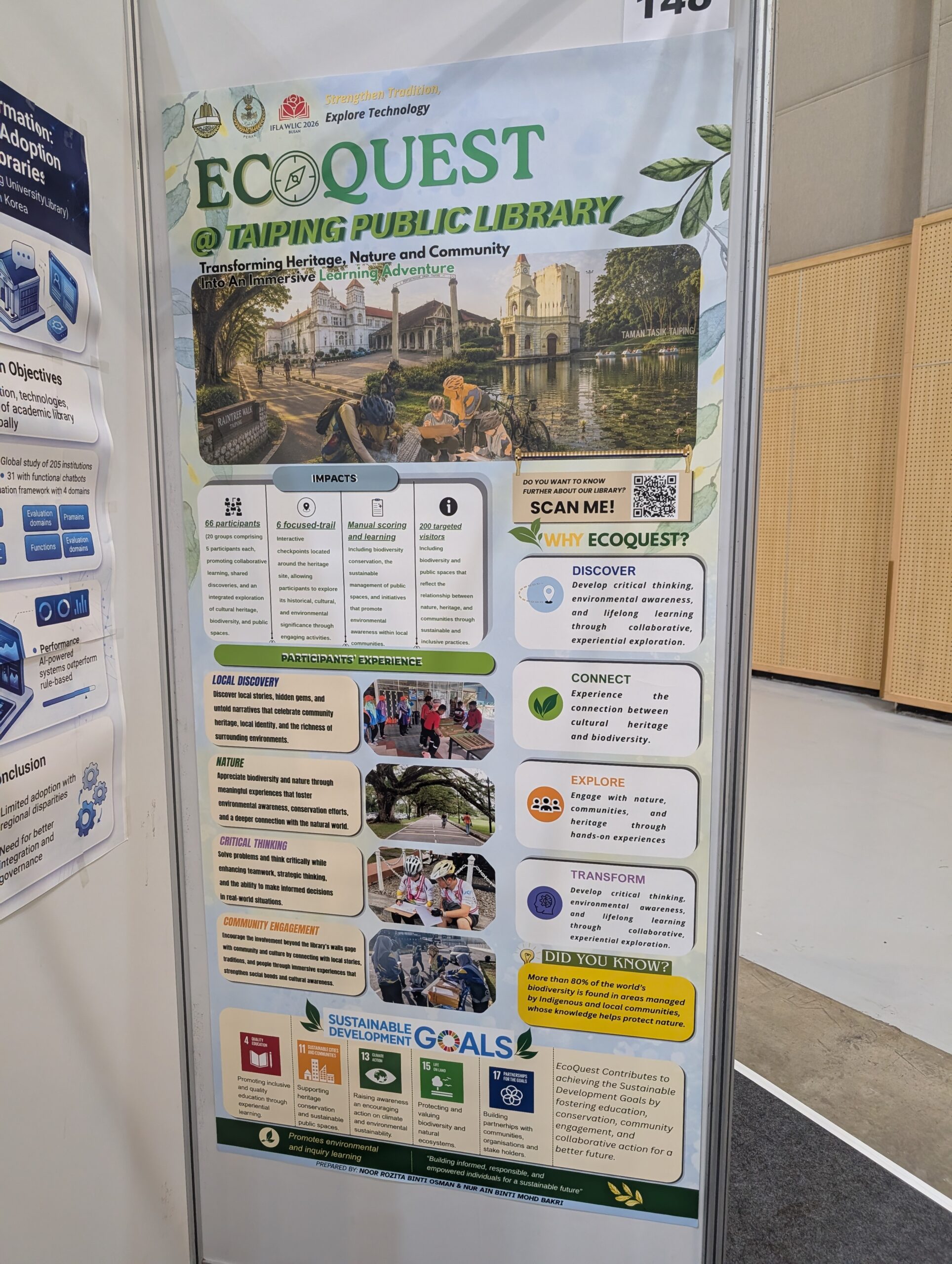
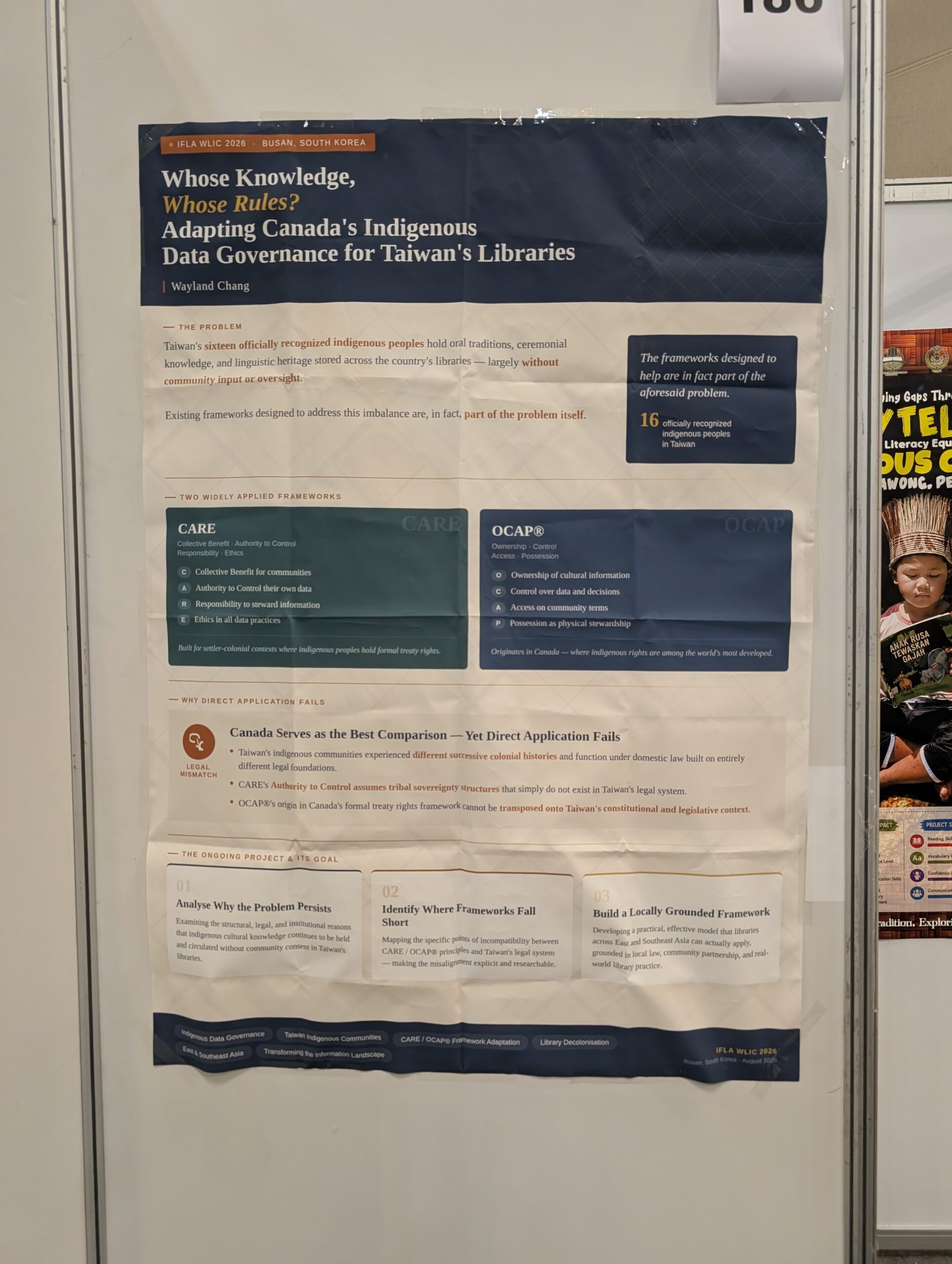
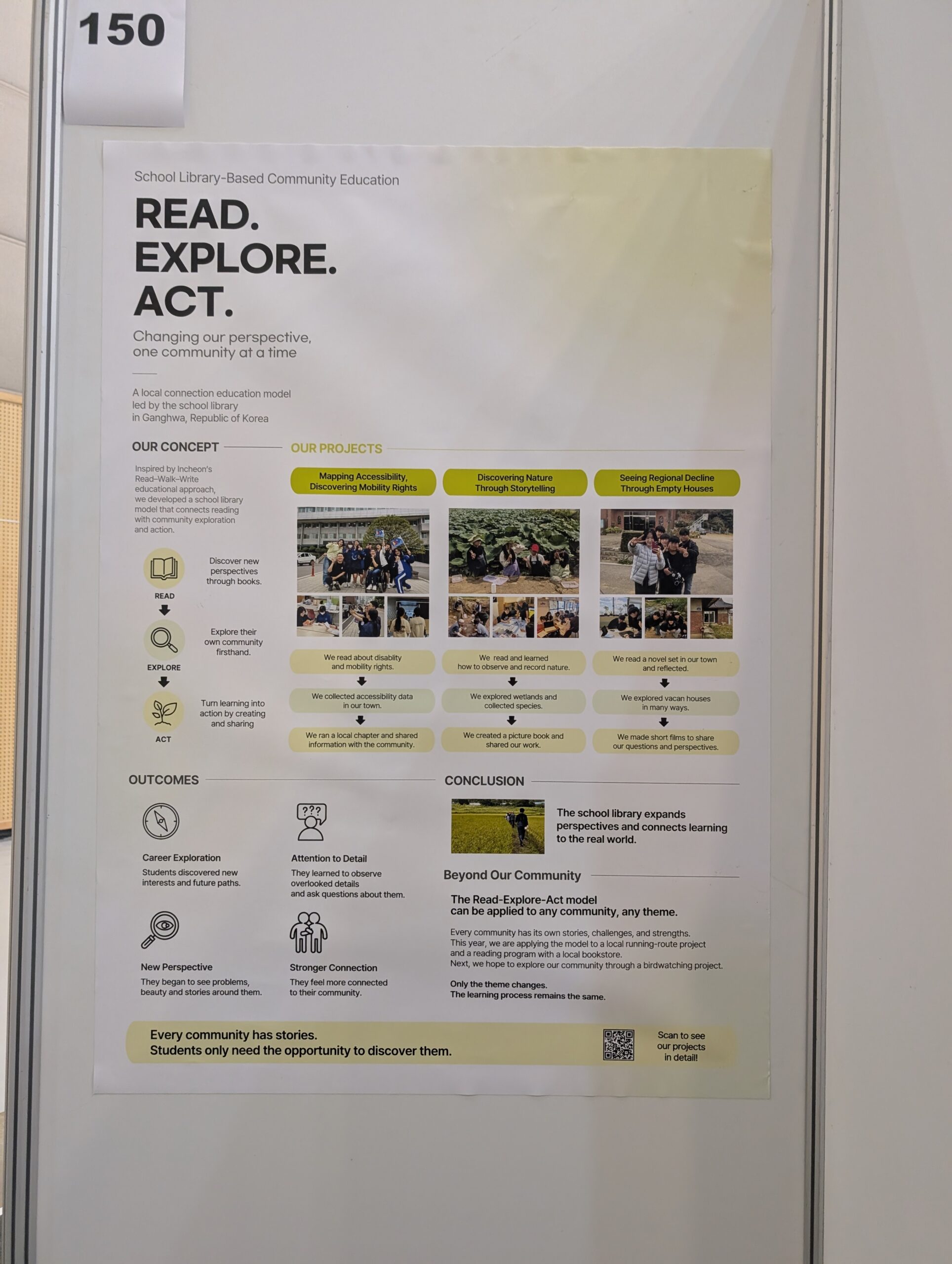
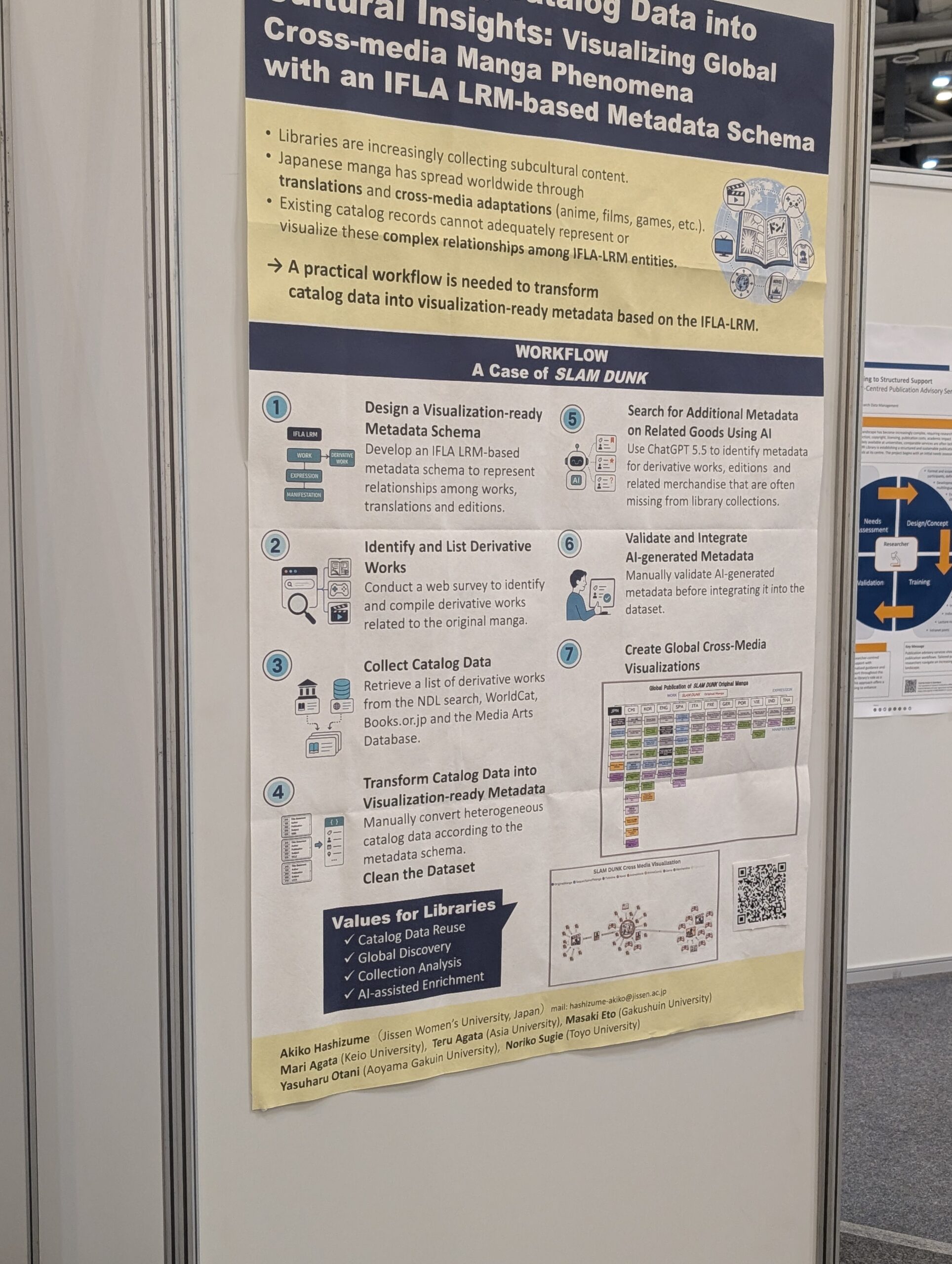
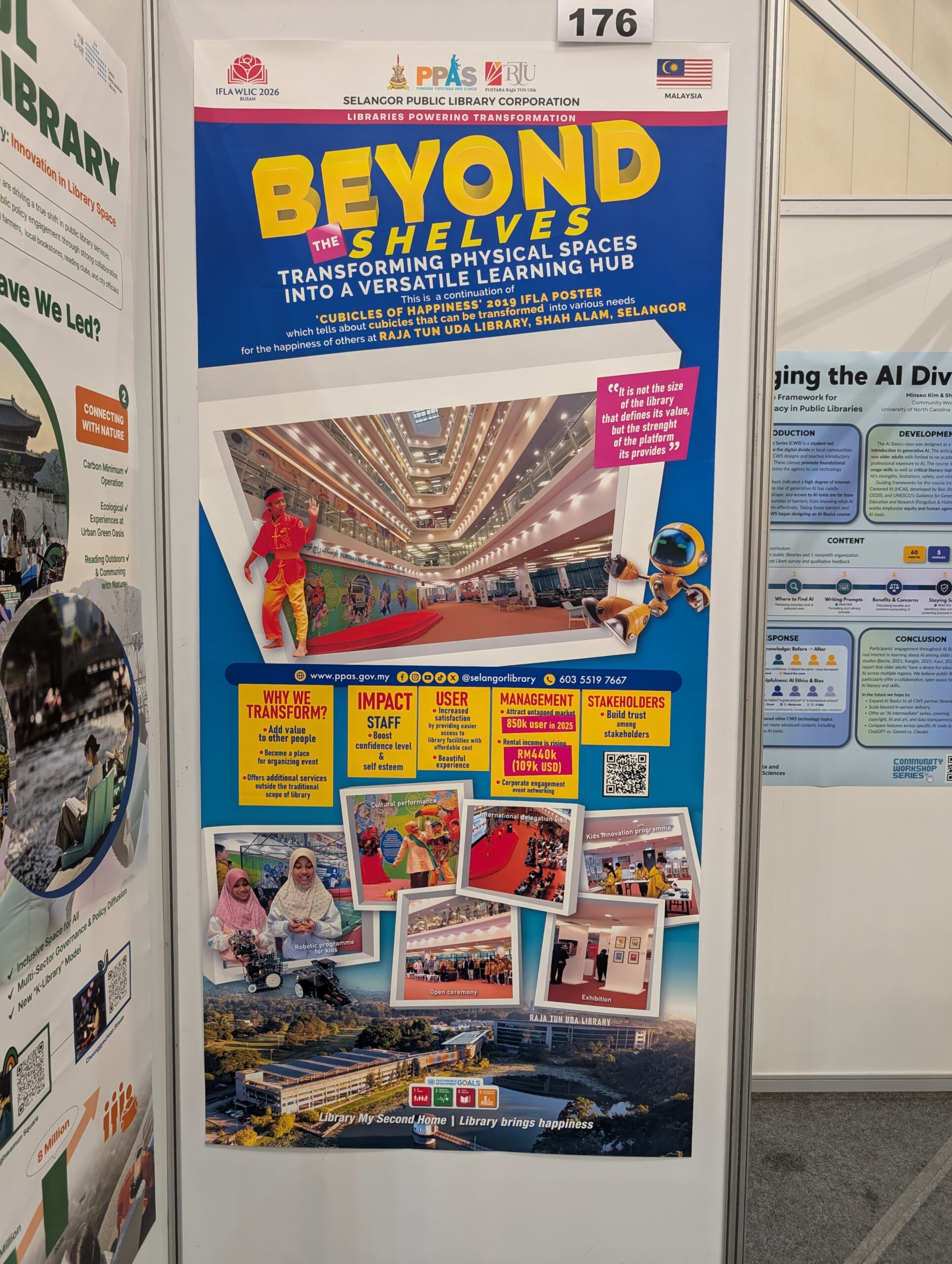
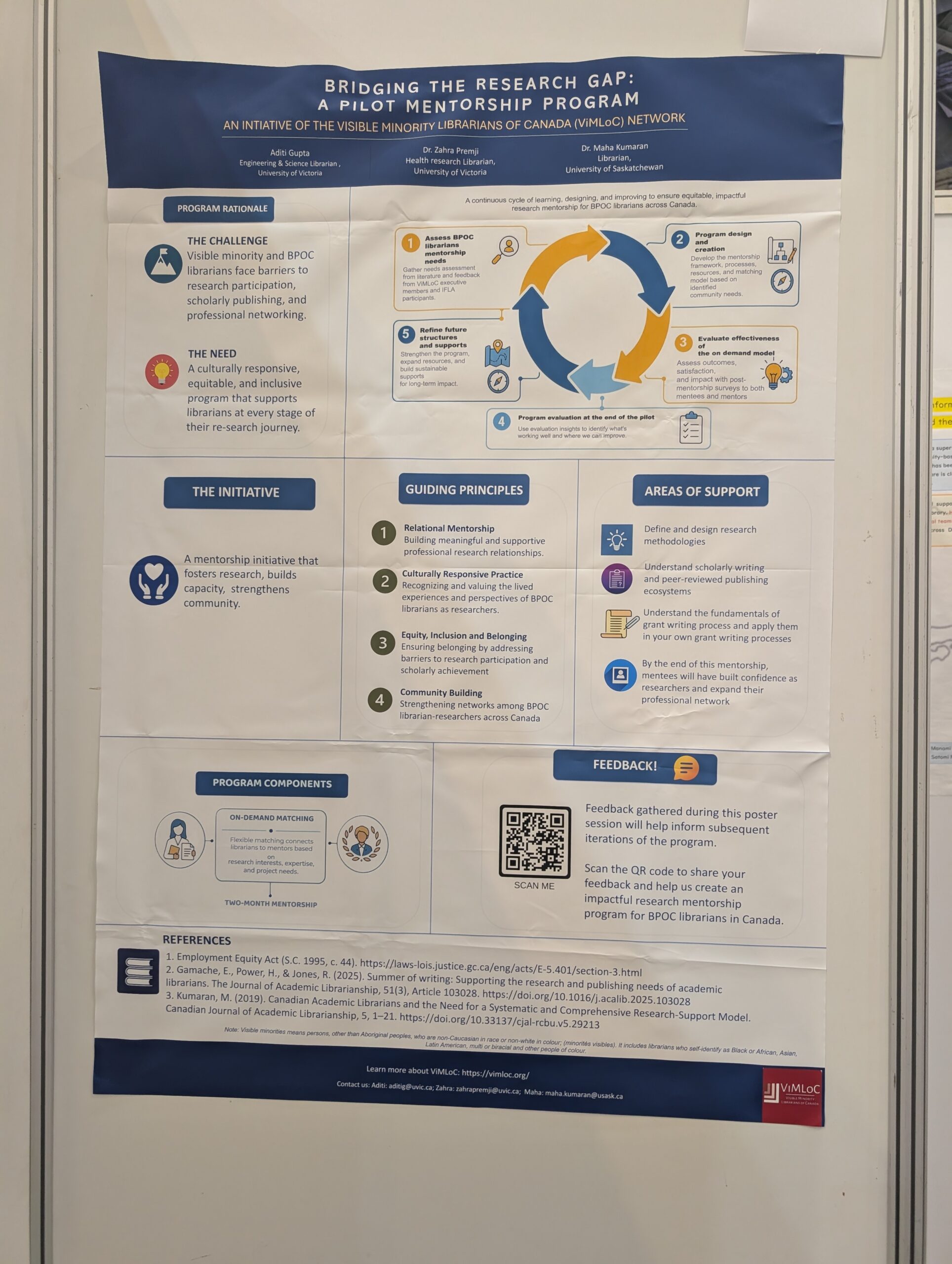
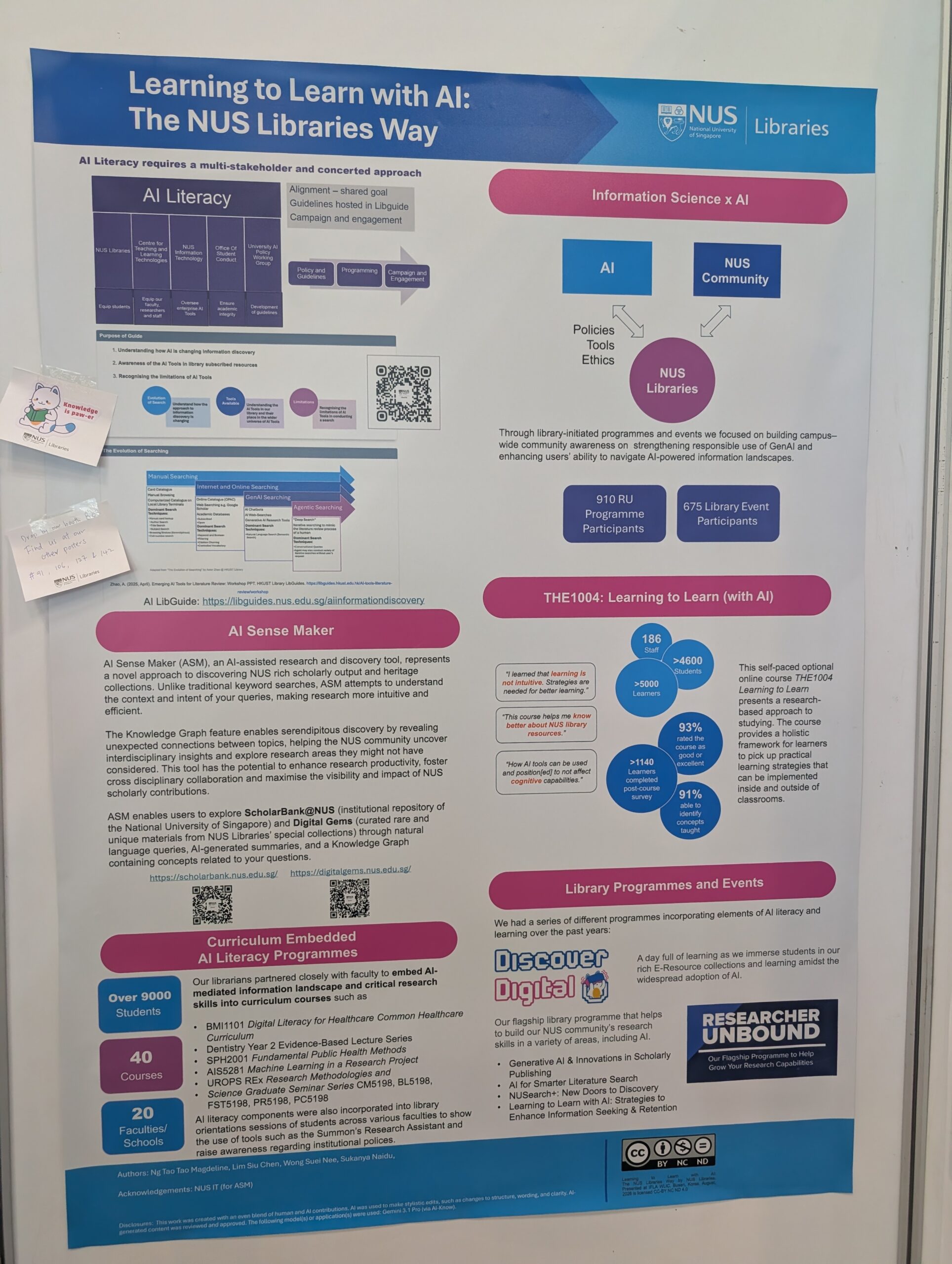
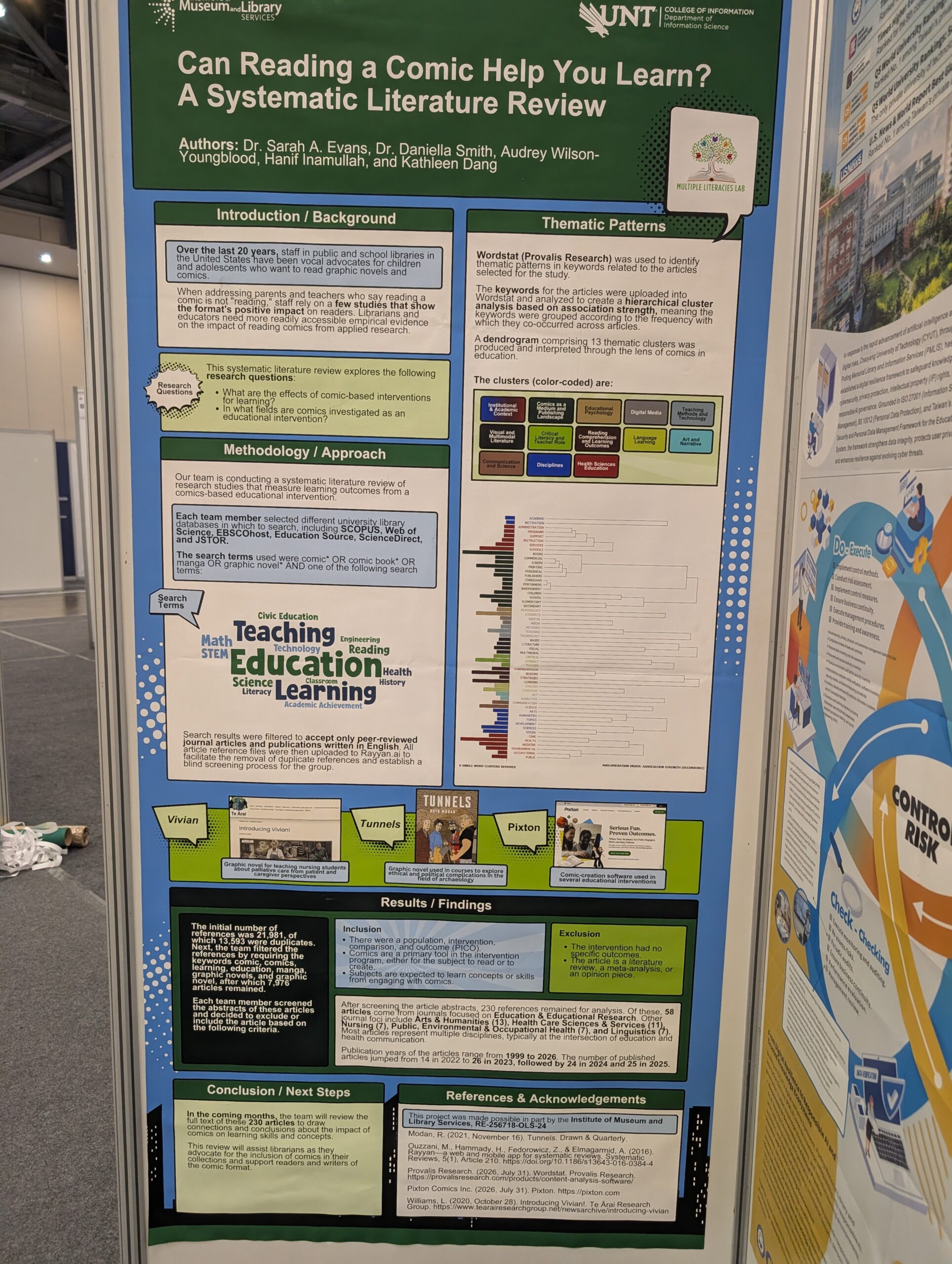
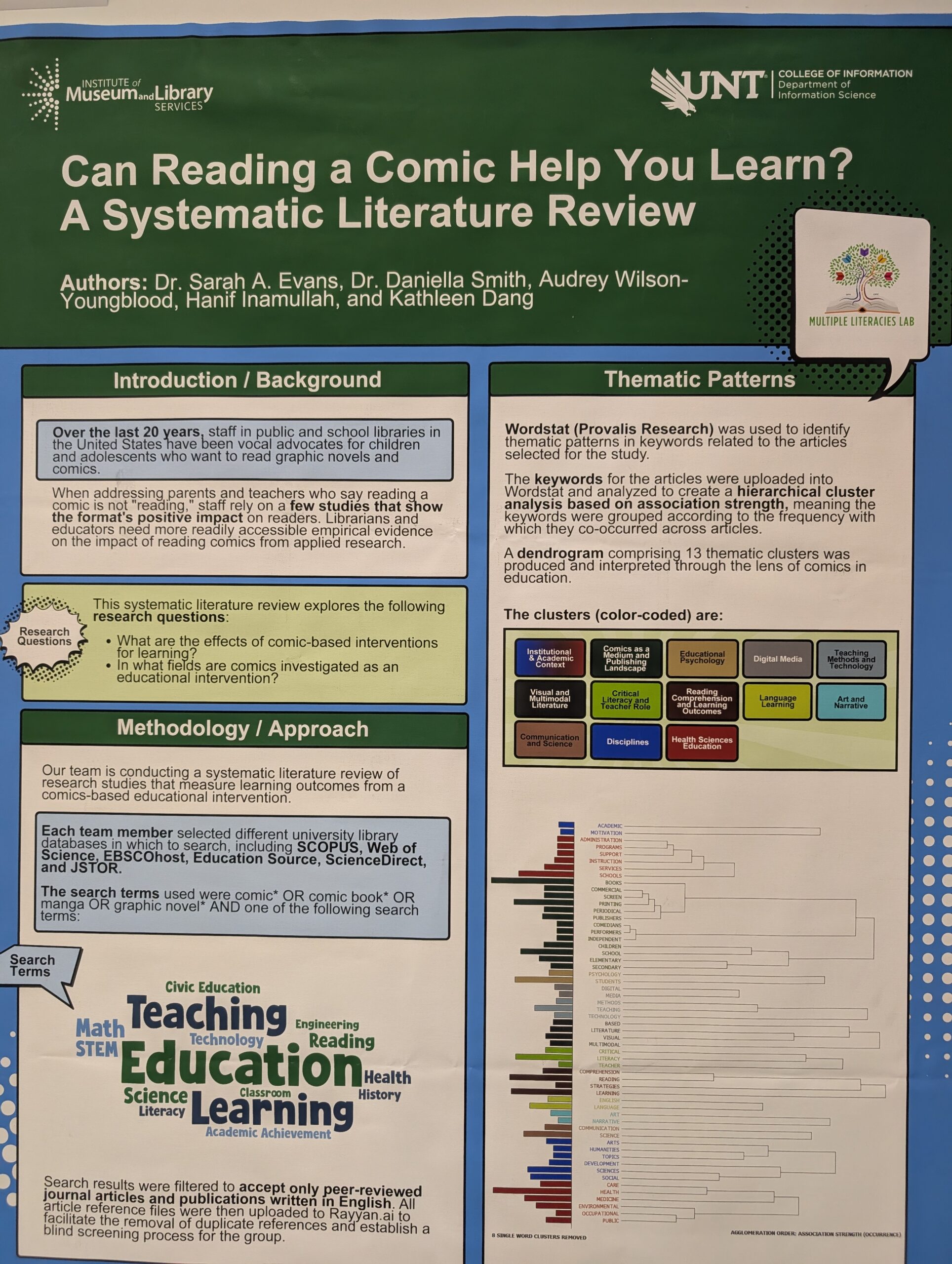
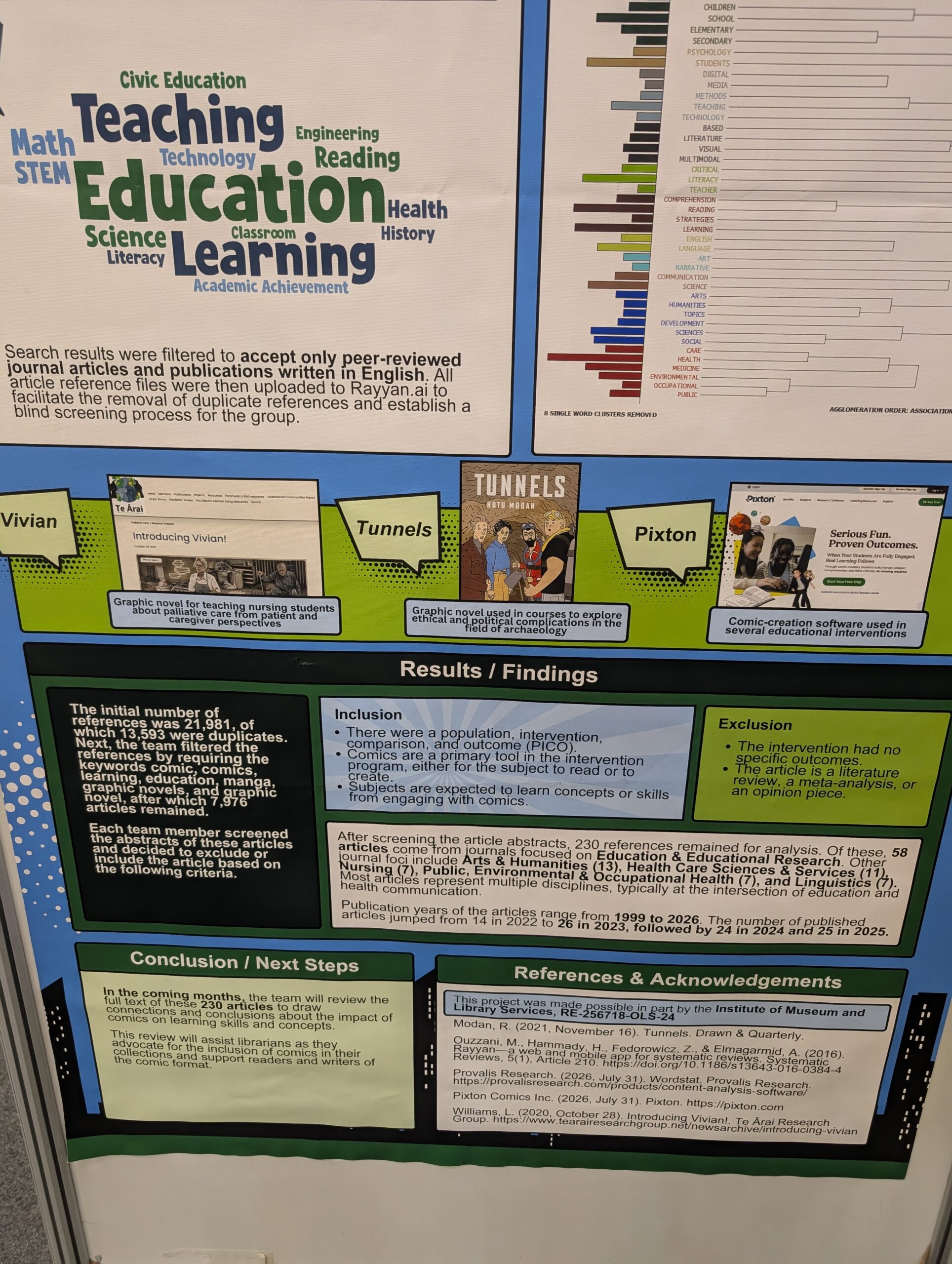
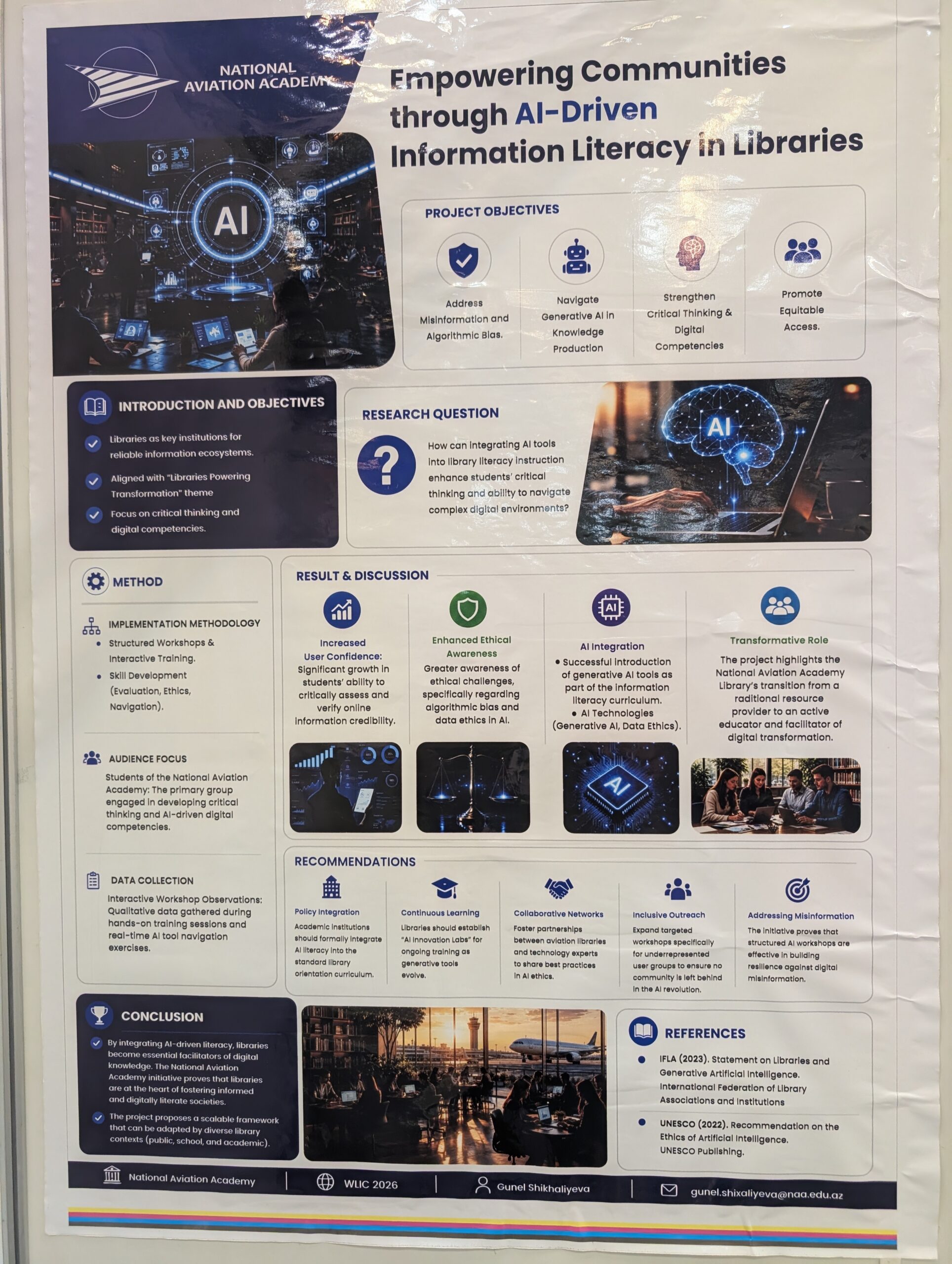
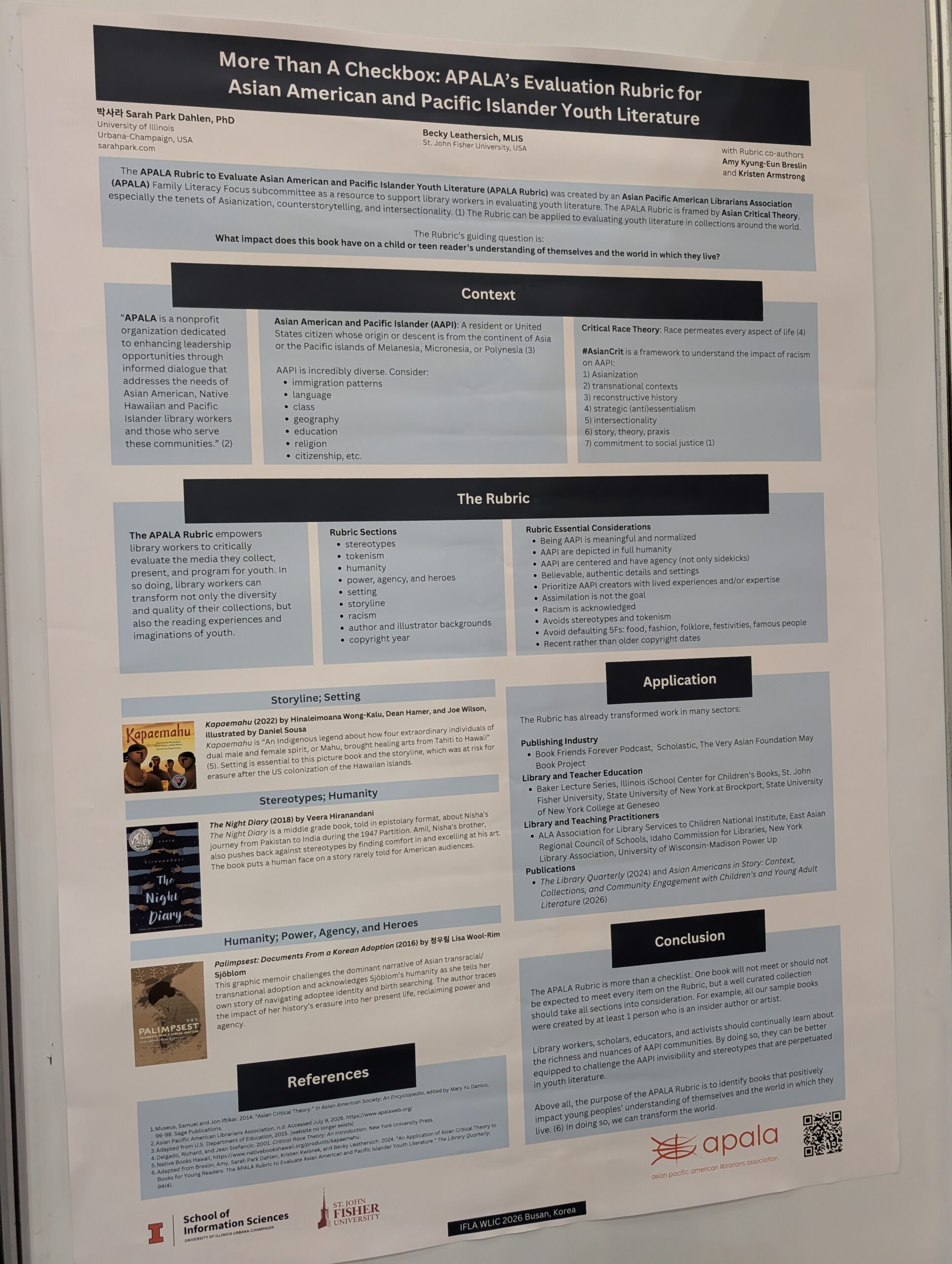
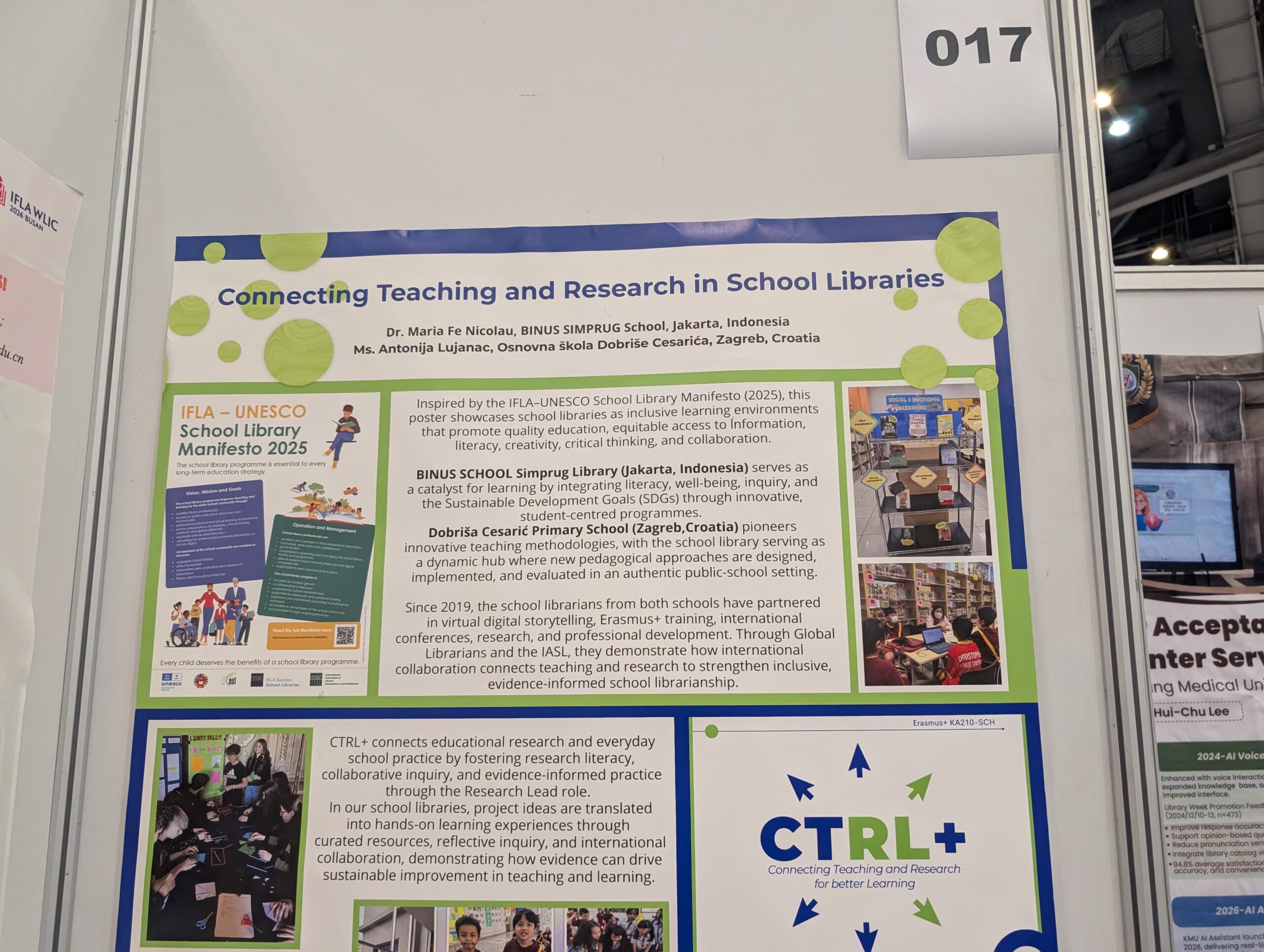
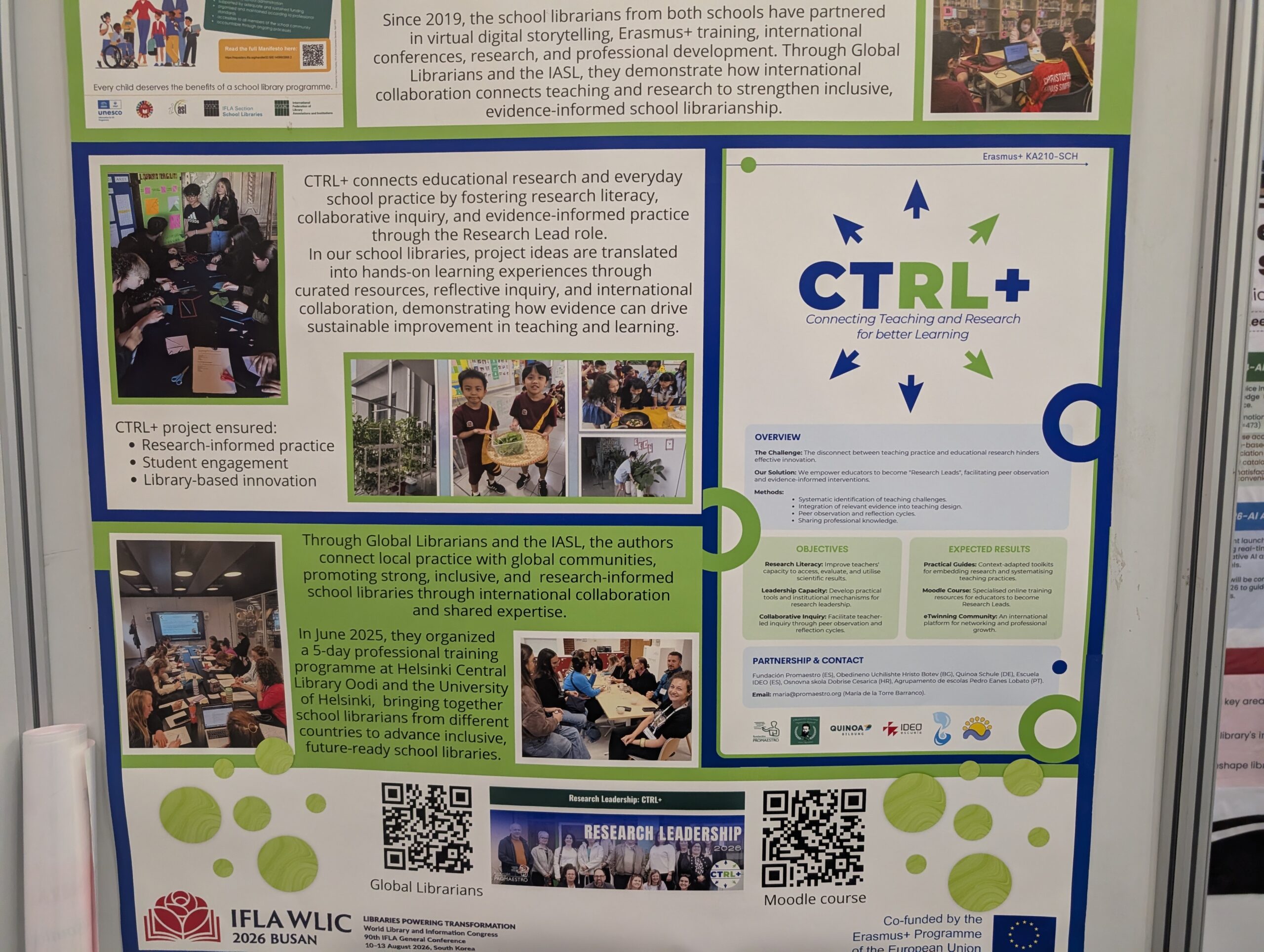
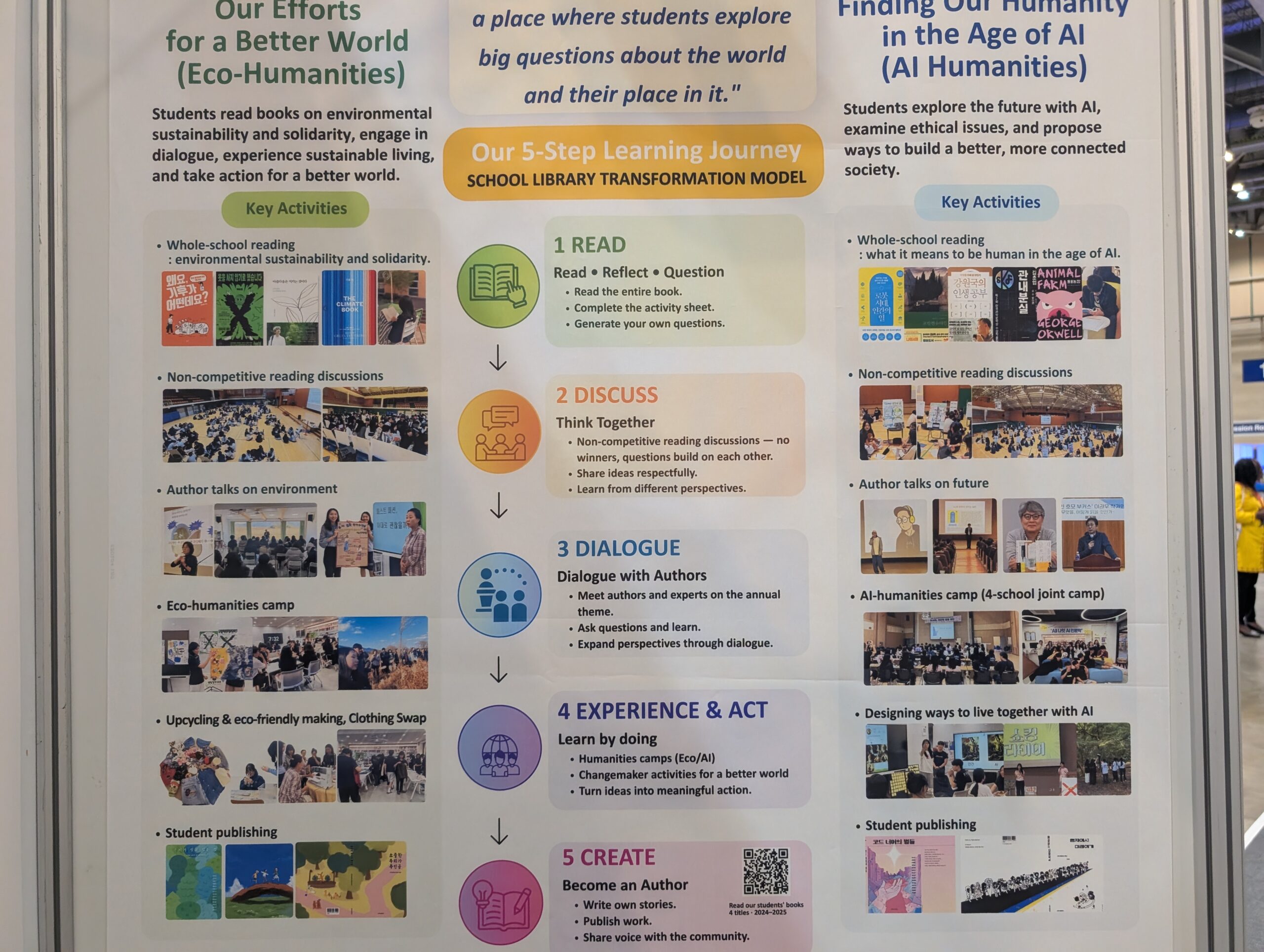
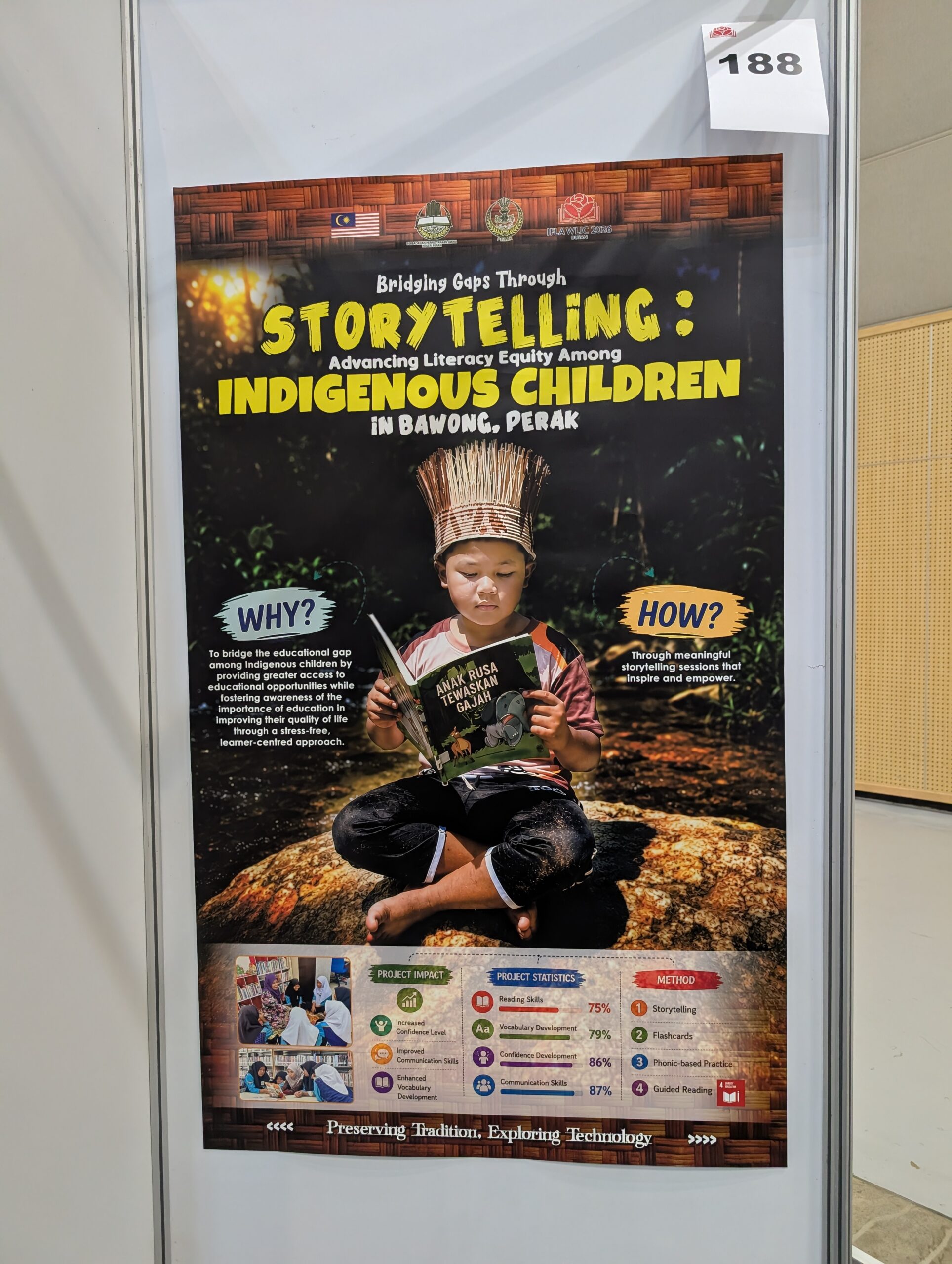
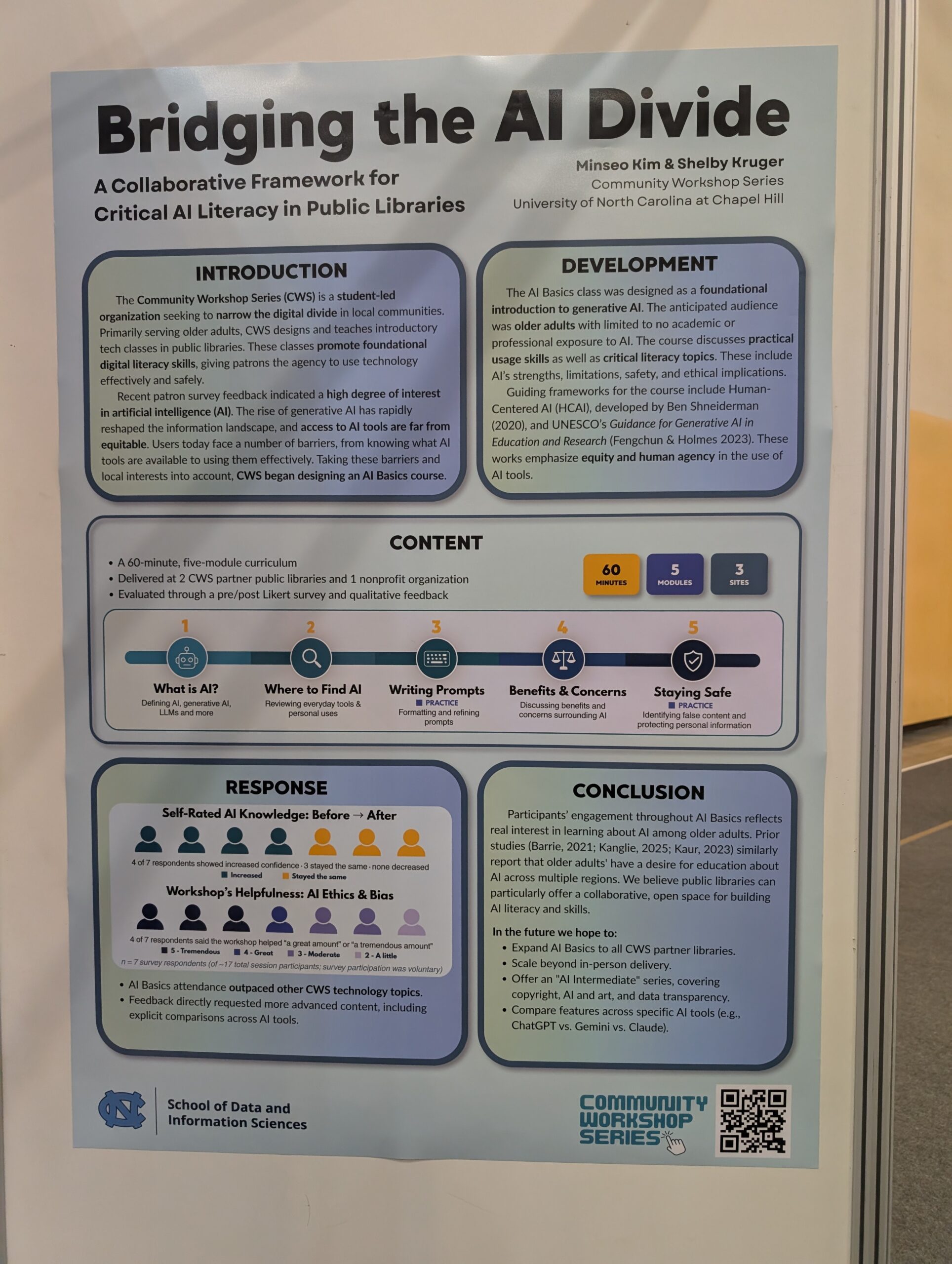
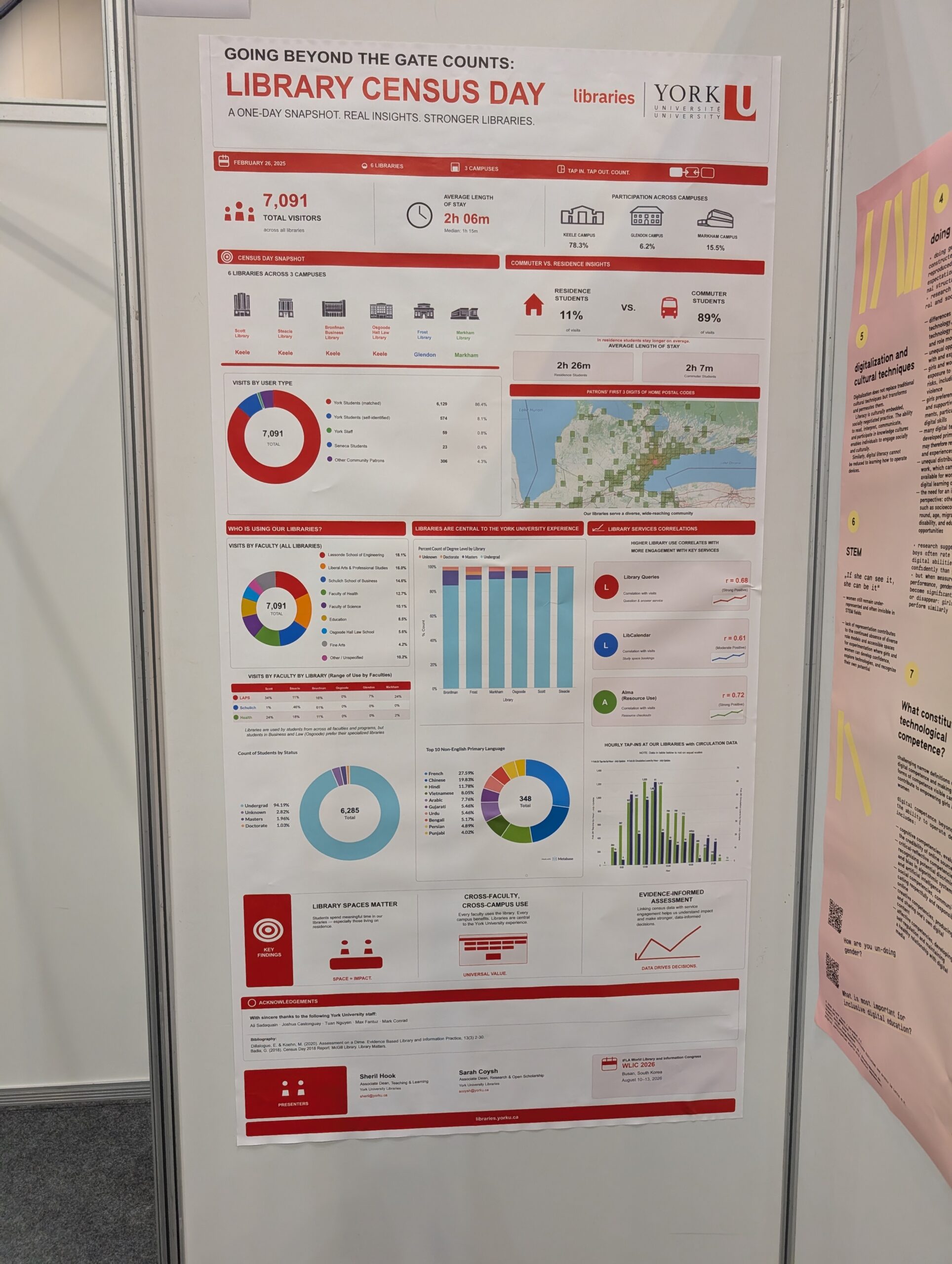
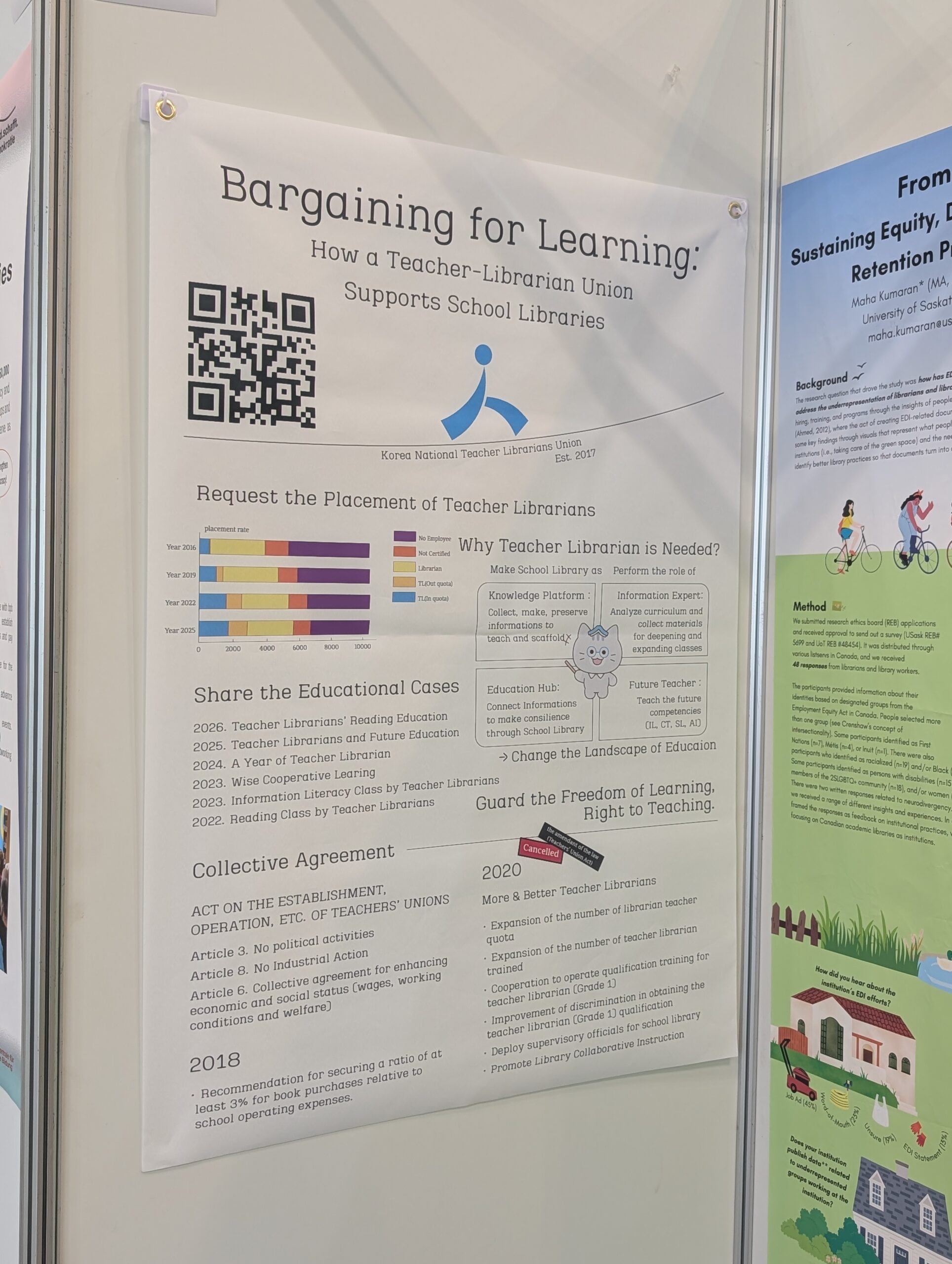
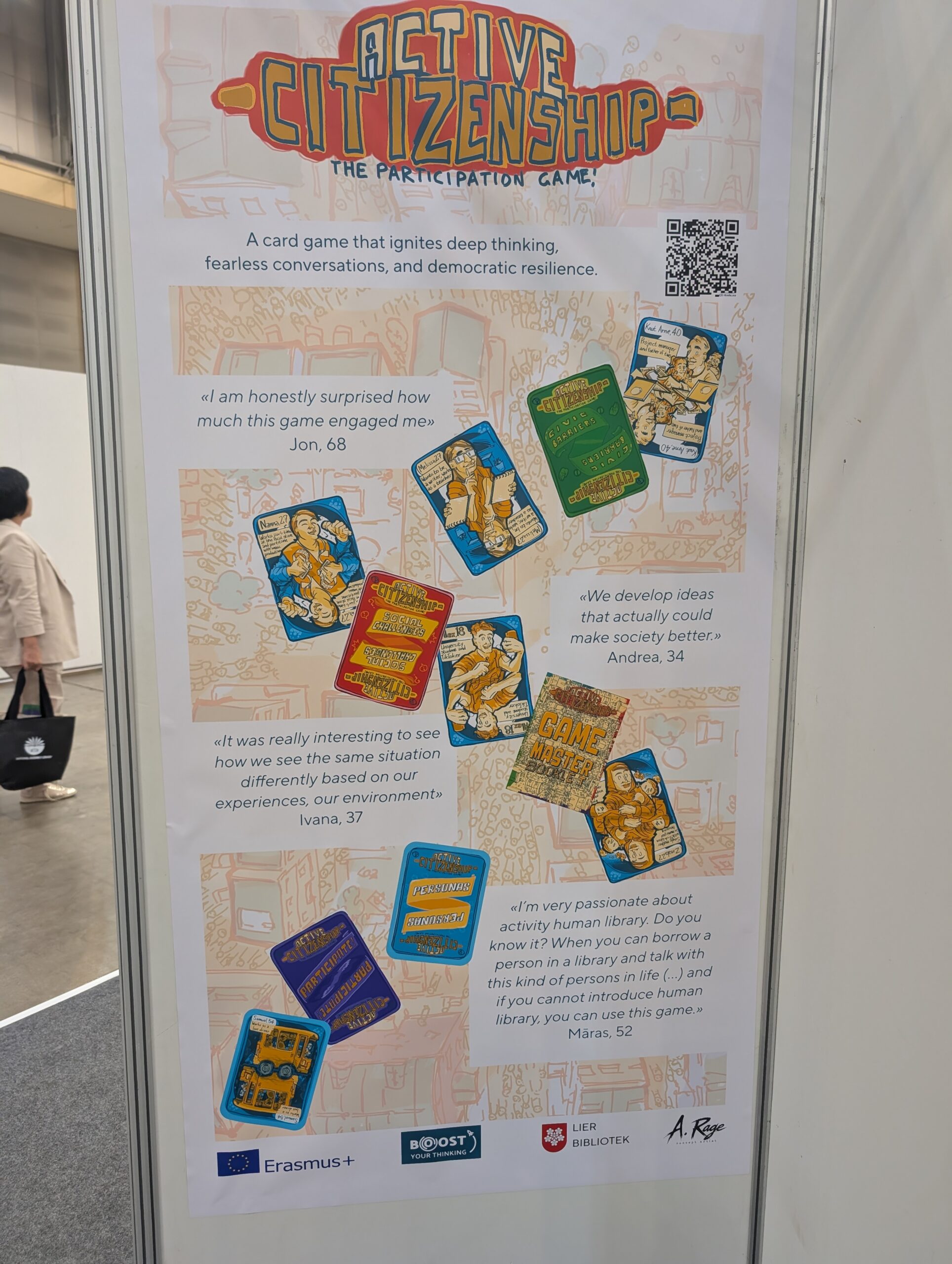
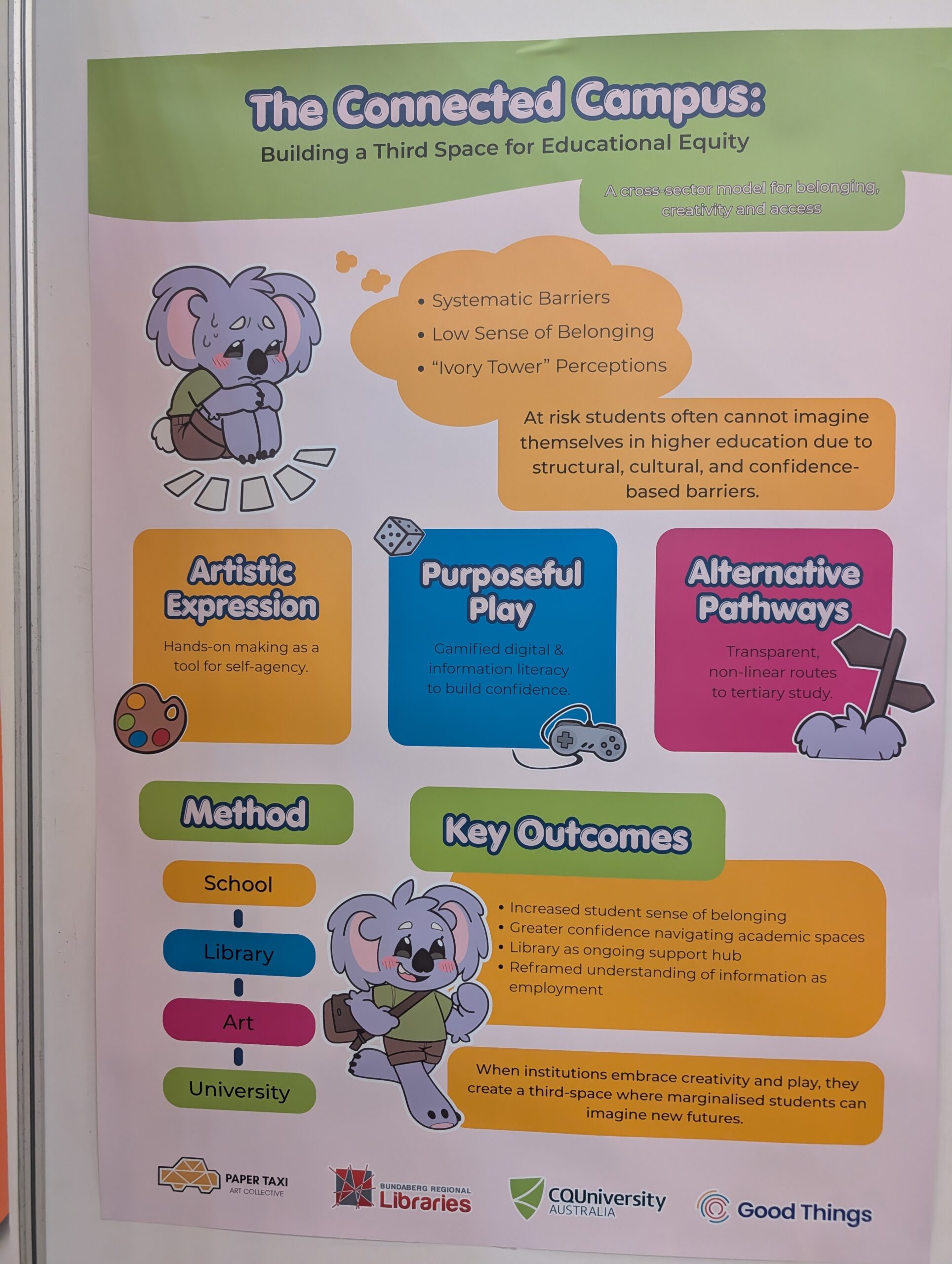
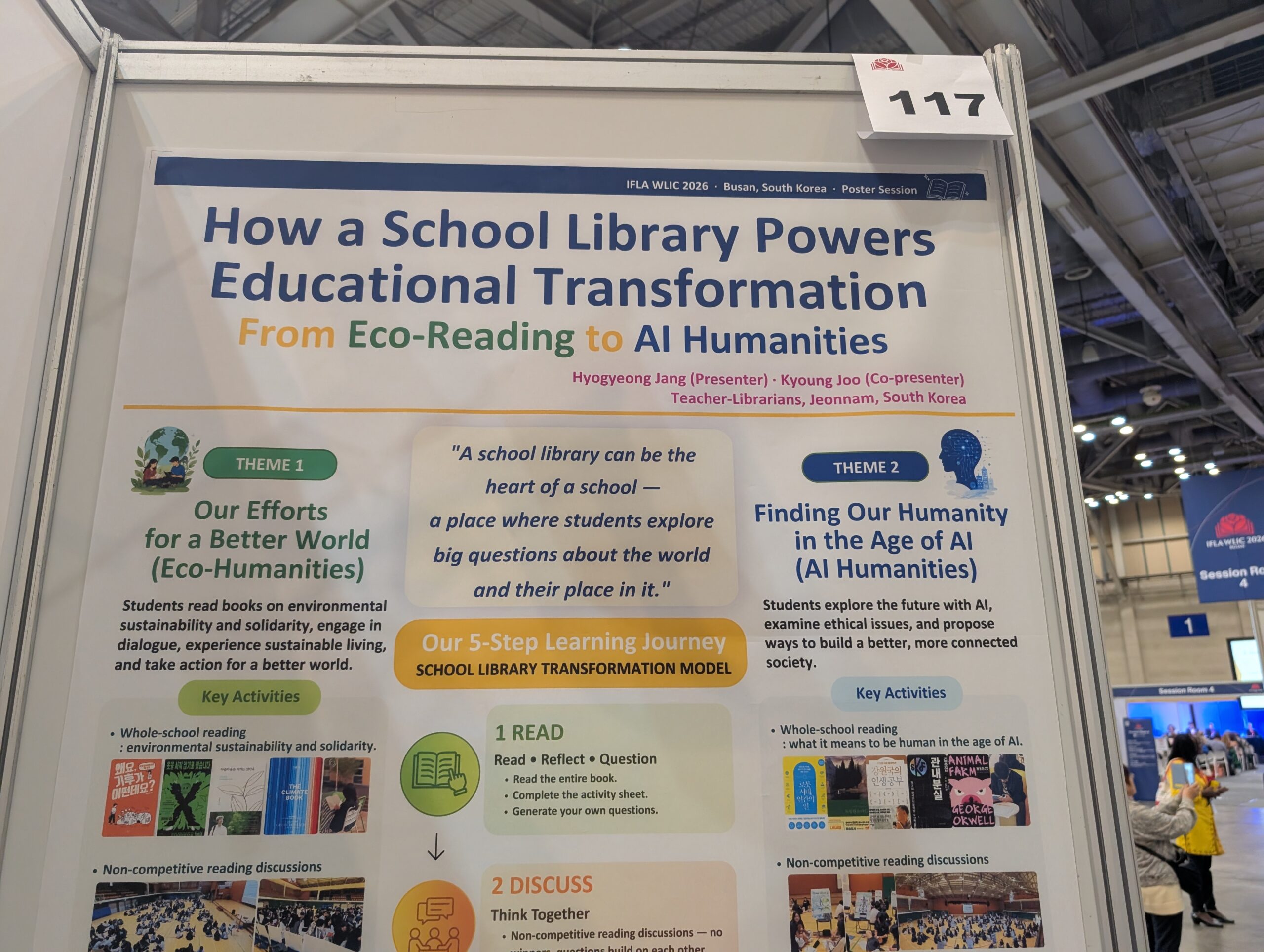
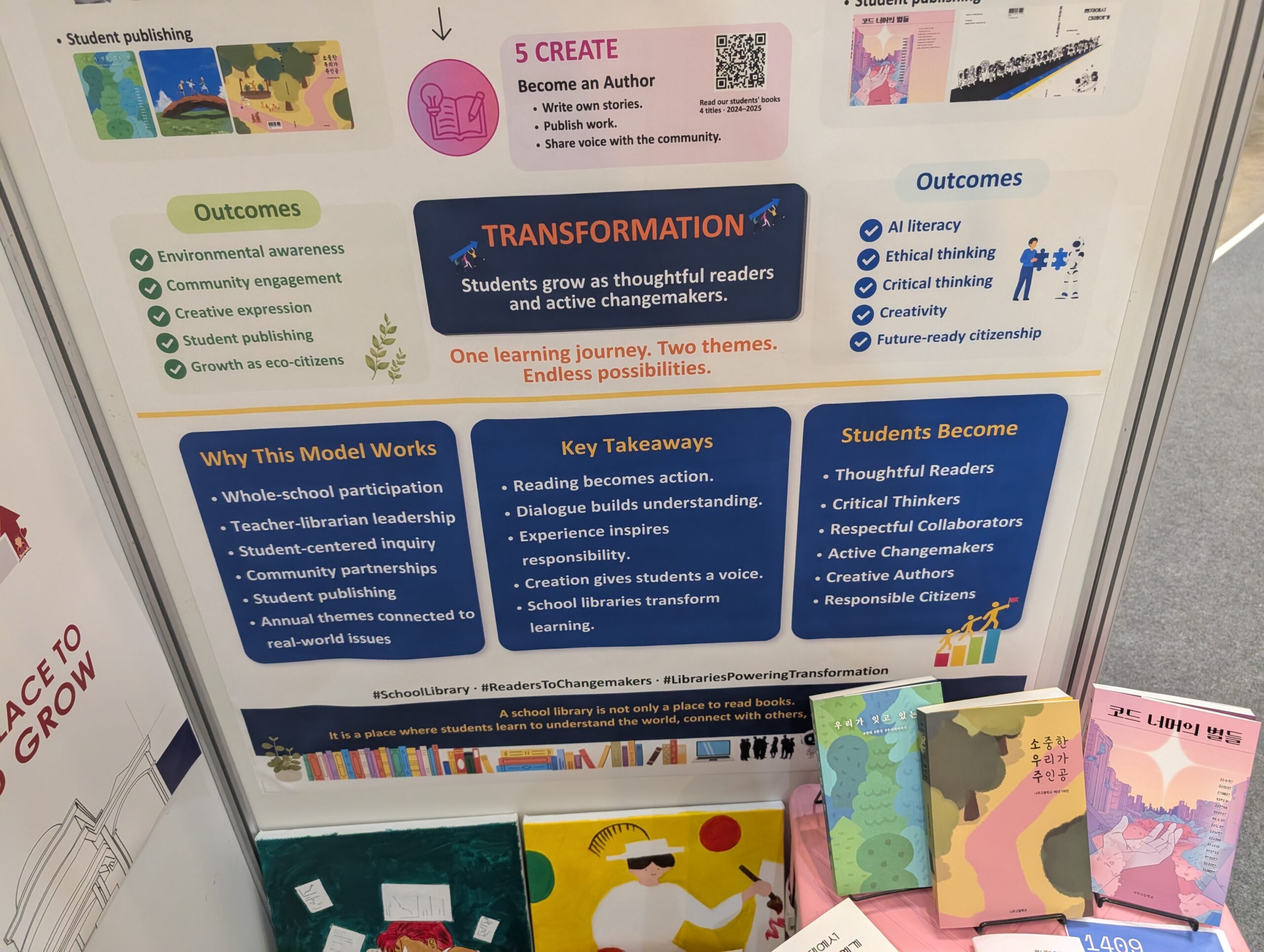
I then took a trip through the massive poster gallery. Nearly 200 posters from around the world, including Michelle Arbuckle’s, were on display. The highlights for me are in the picture gallery below. Fascinating research supporting readers, reading and literacy. Around the world, similar problems are being faced–Indigenous language reclamation, AI and information overload, advocacy for libraries–and it was great to see what others are doing and talk to some of the minds behind the work and how we move forward.
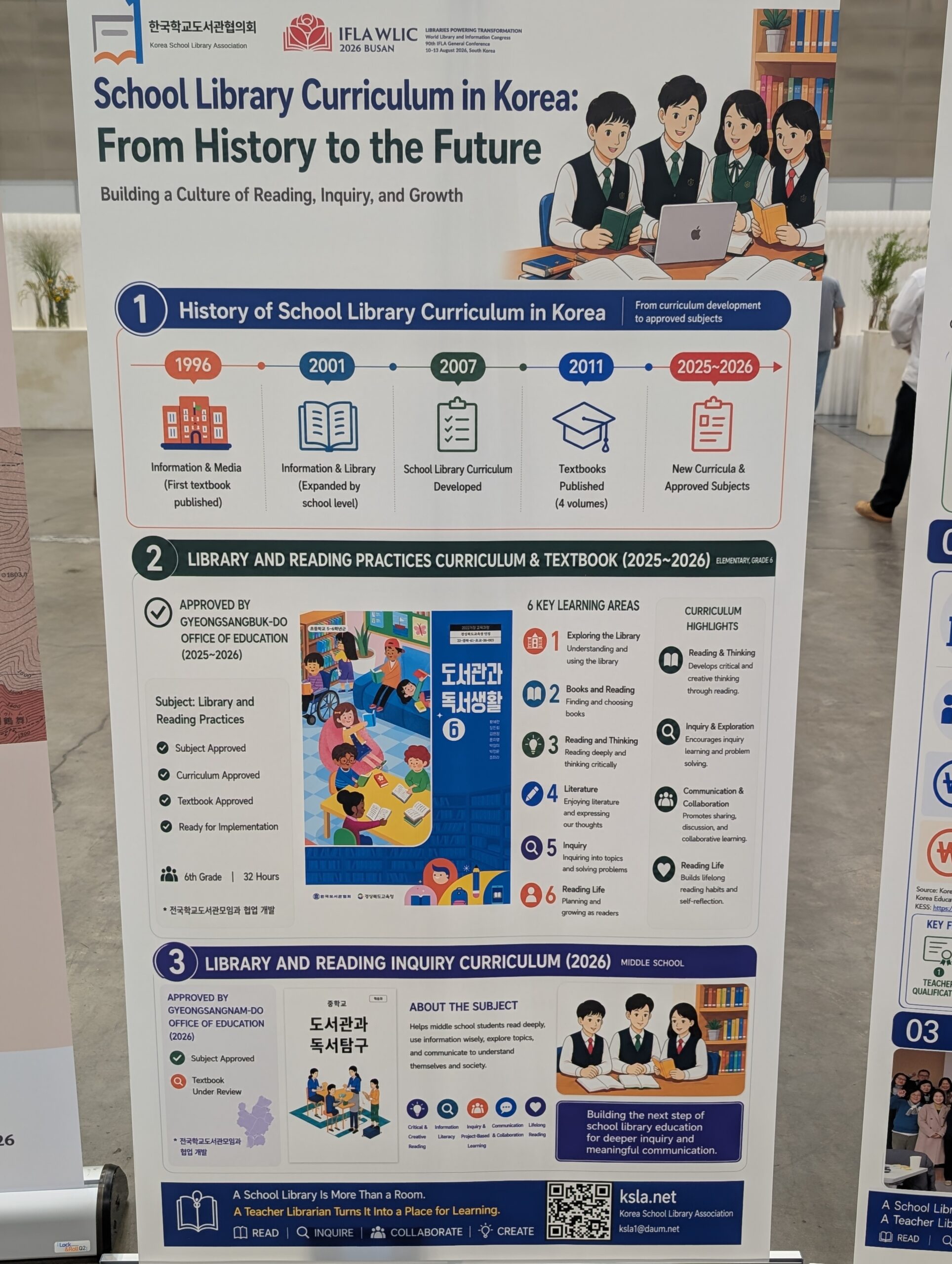
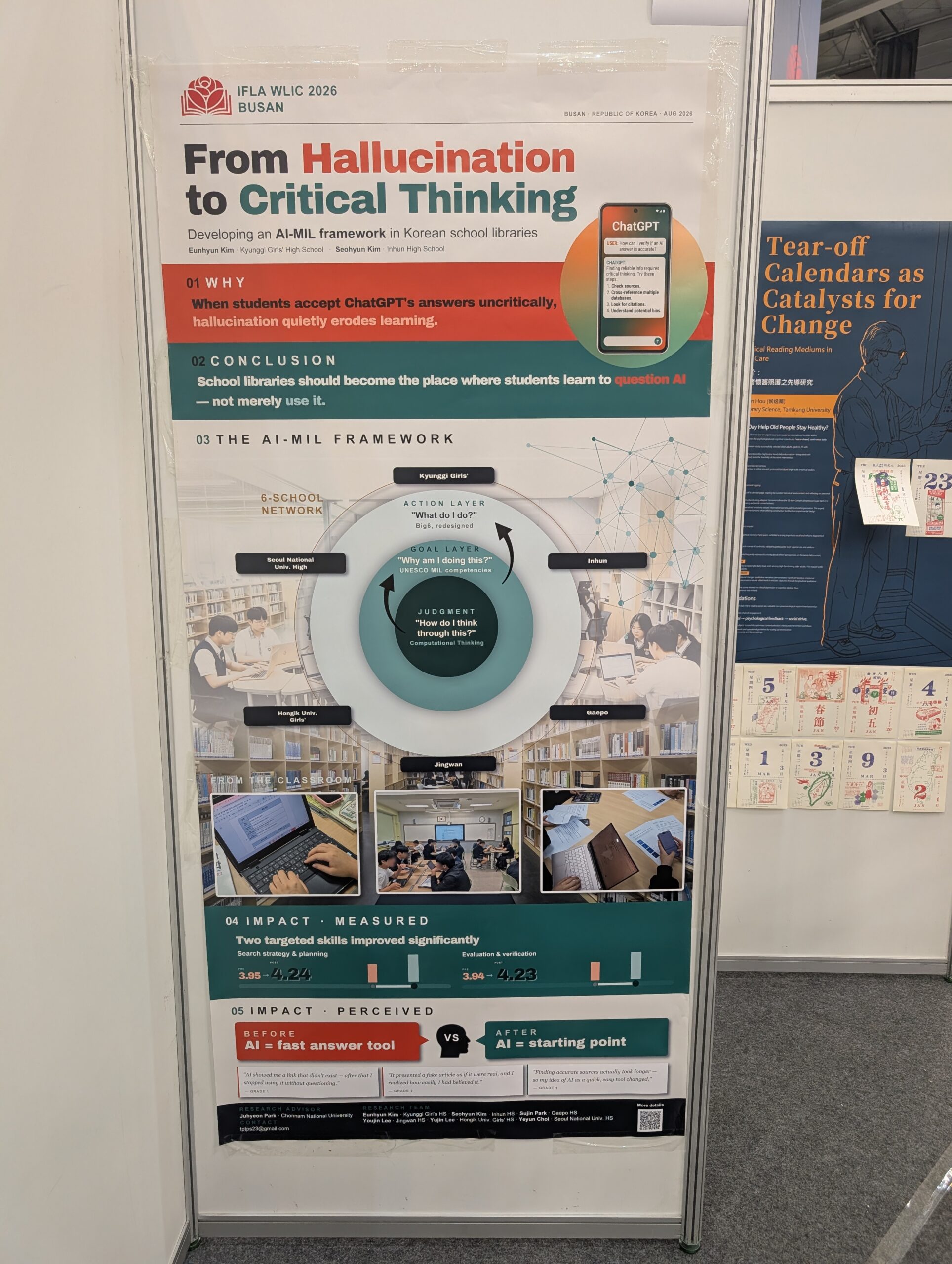
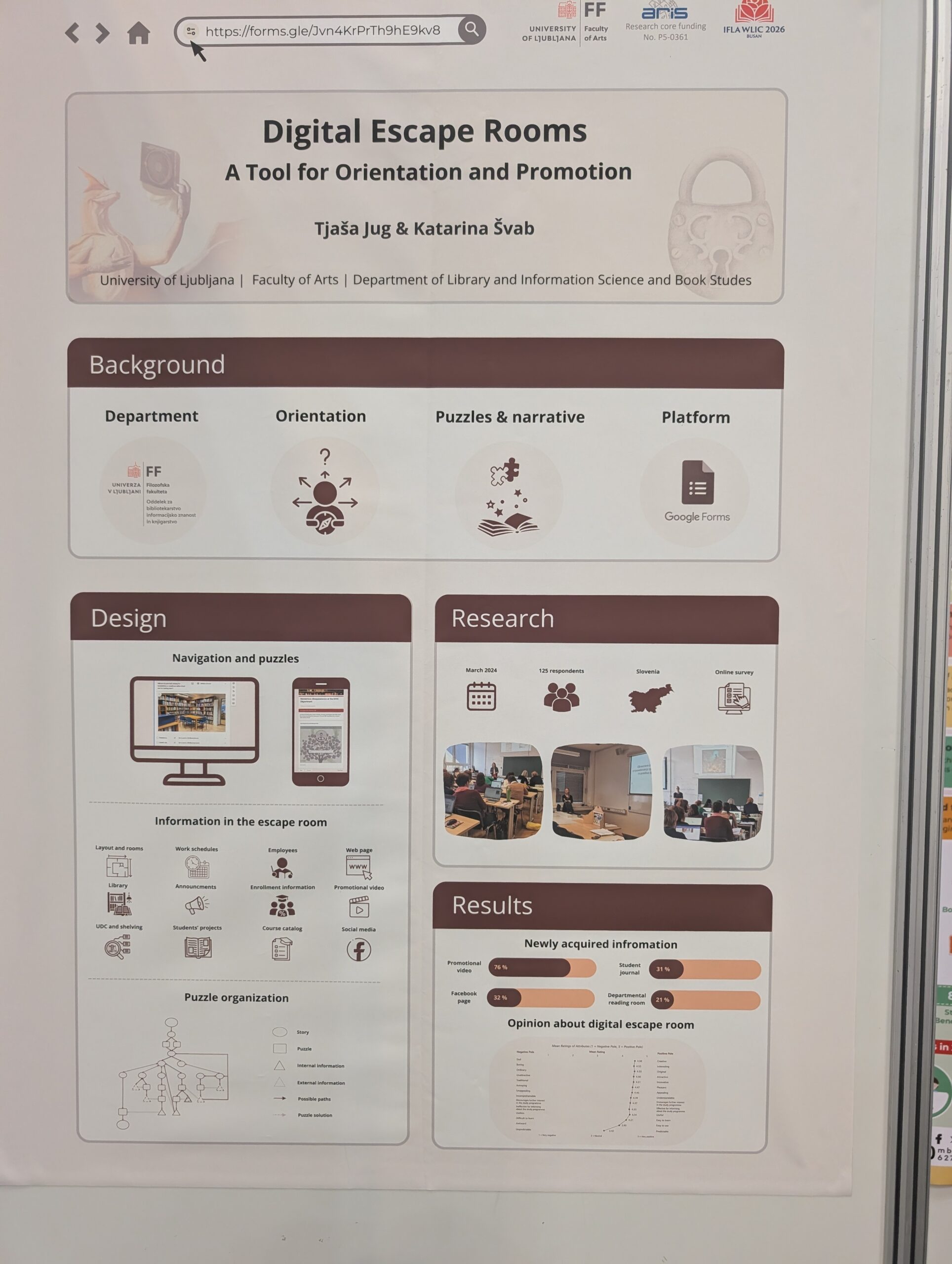
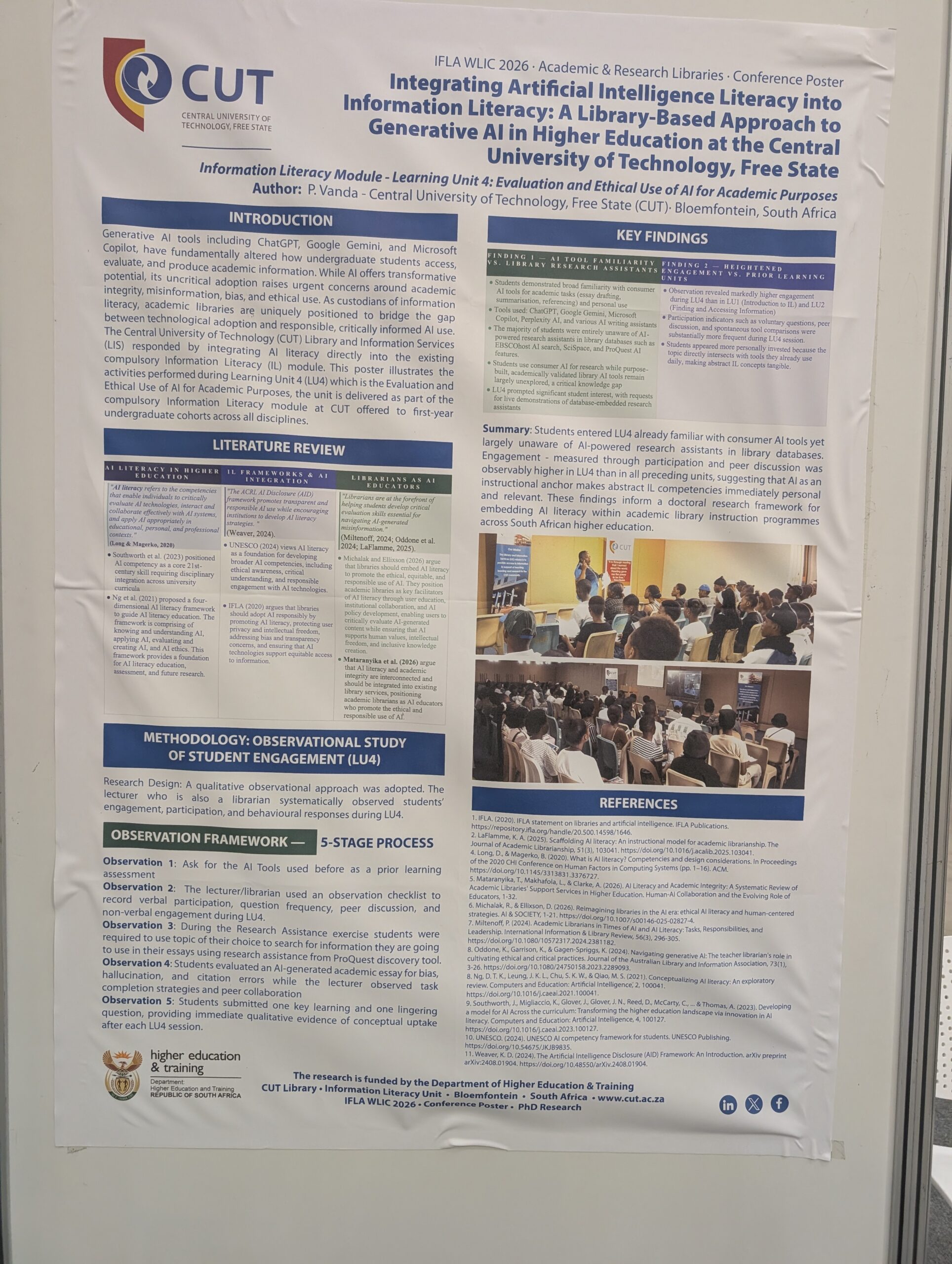
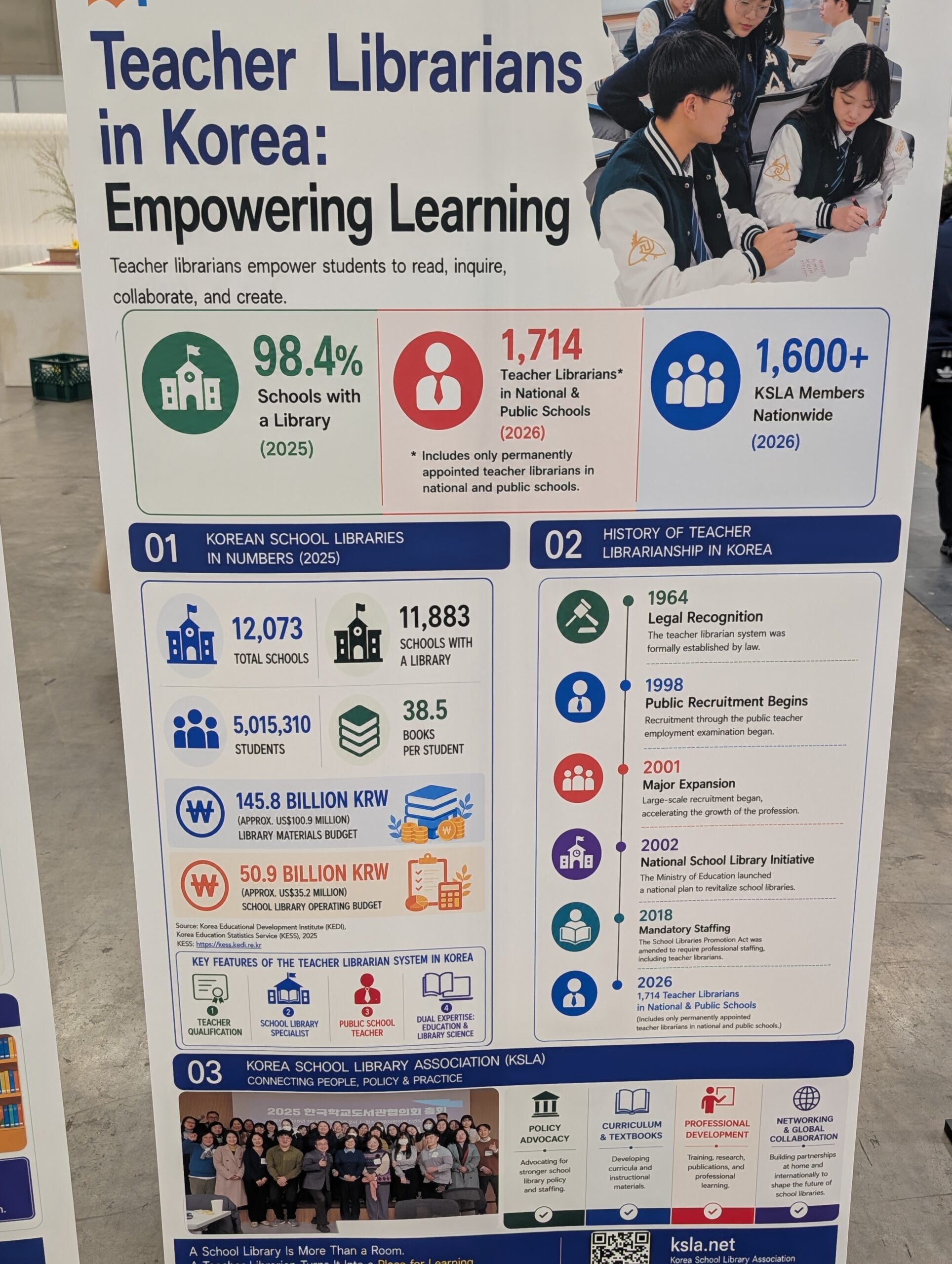
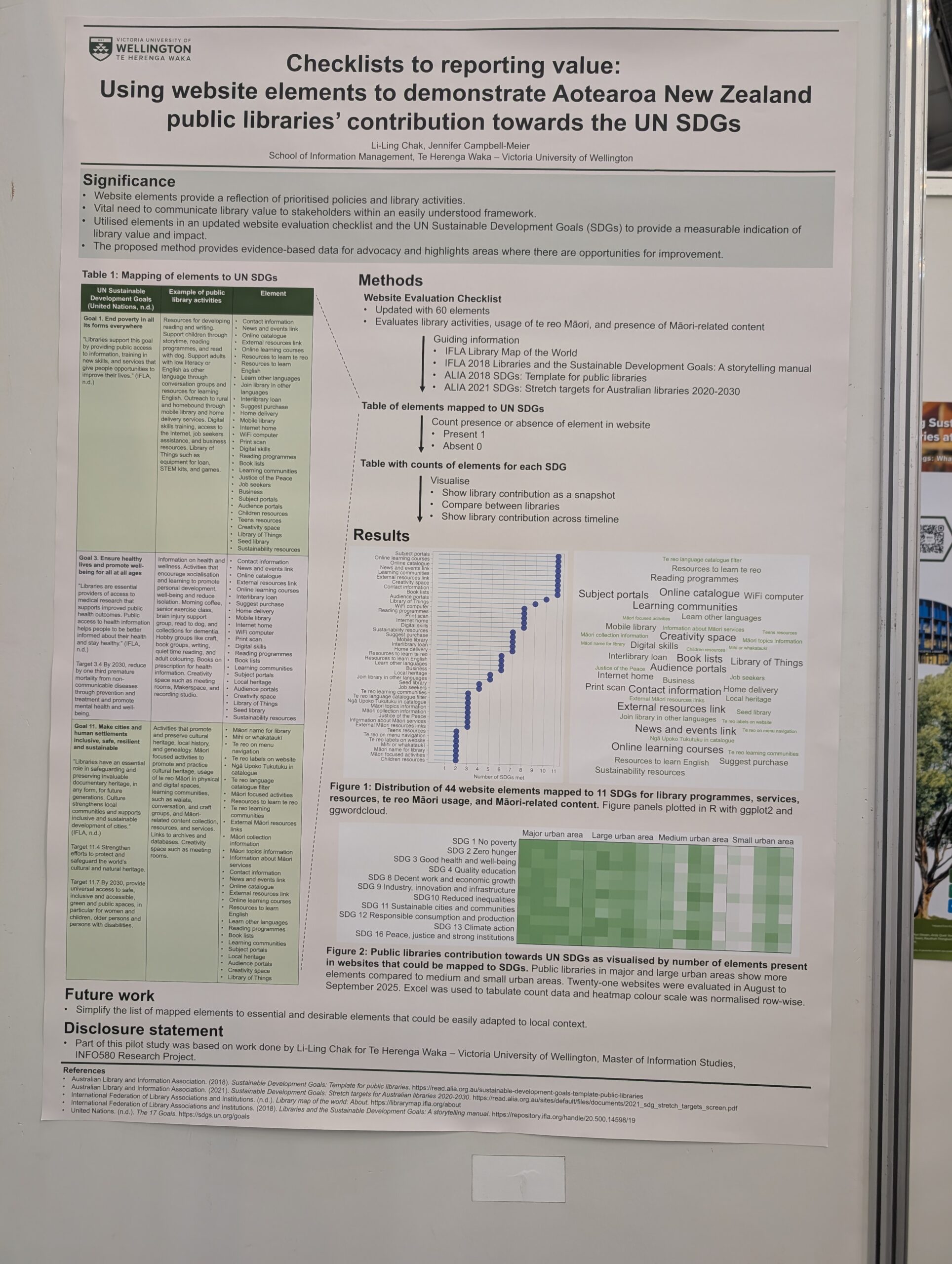
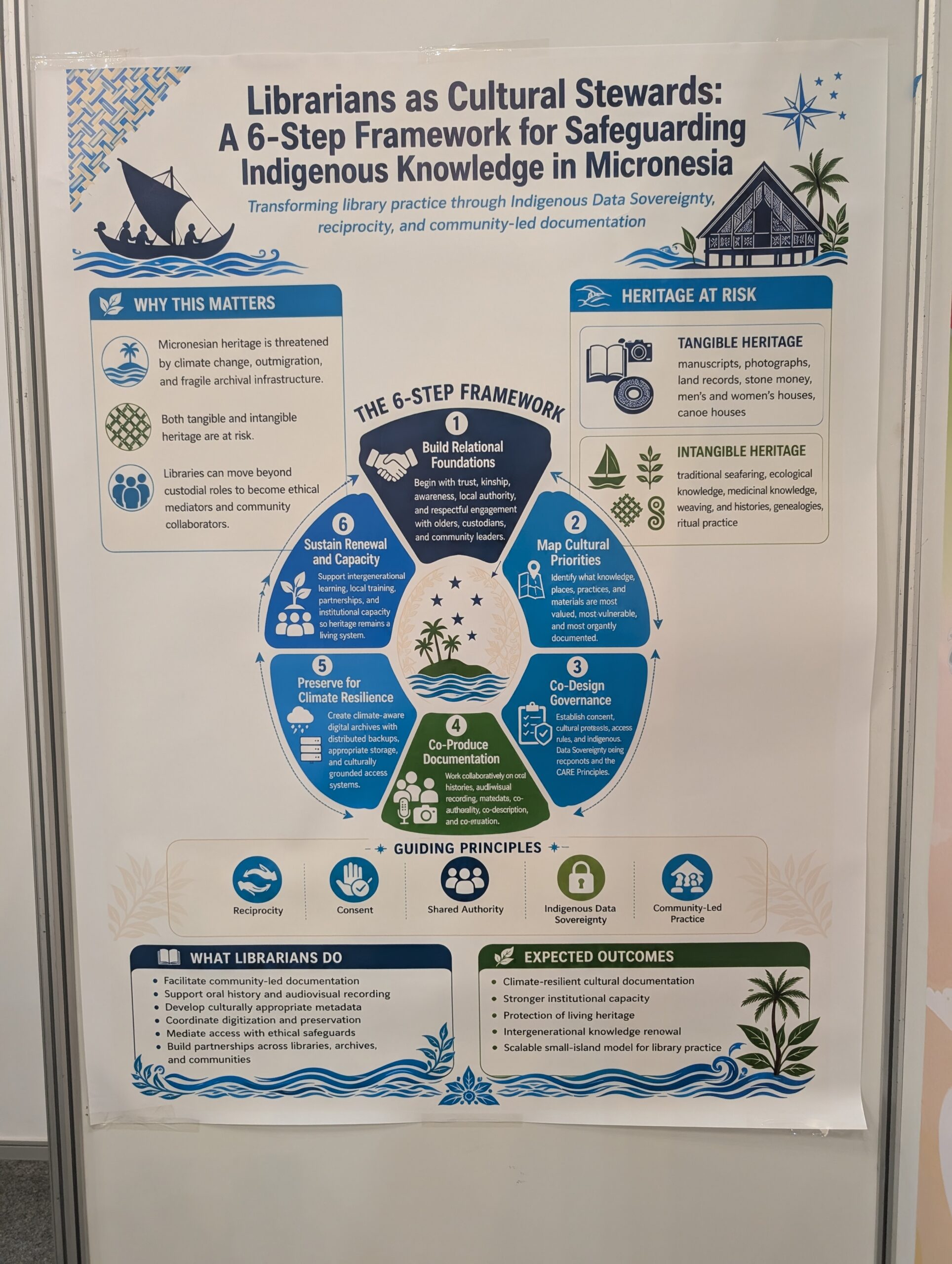
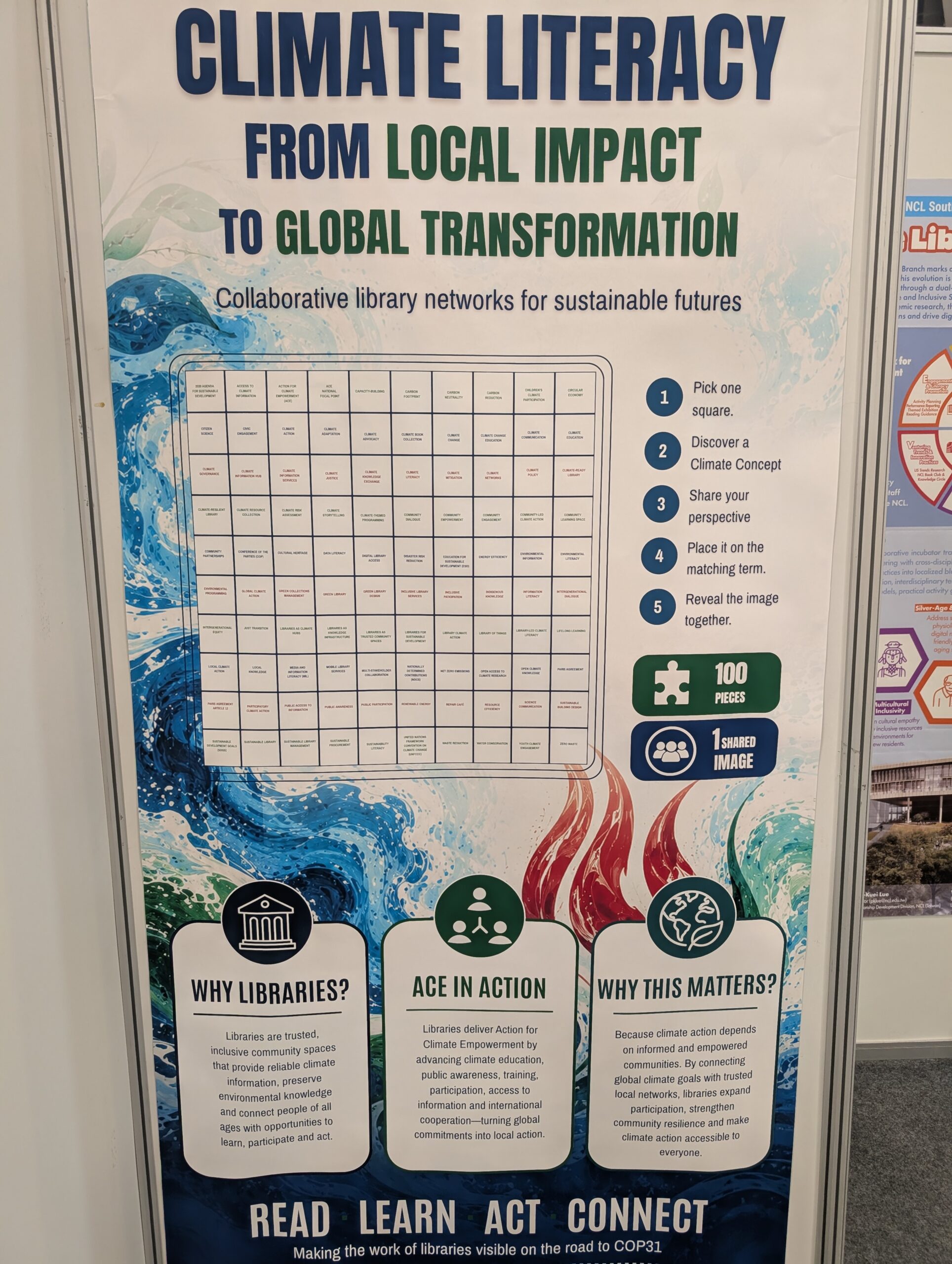
Next up, Shari Werb from the Library of Congress in the United States talked about media literacy in action with their Source exhibition. Future researchers ‘meet the librarians’ through a display meant to de-intimidate and humanize the librarian with short engaging first person videos representing a wide range of librarian expertise. They then go on an interactive research journey that allows them to see the evolution of research from card catalogs to now and then learn how to build narratives from seemingly disparate collection items that tell the stories of real-life researchers. These twelve research journeys represent real research done by kids and adults at the Library of Congress. Finally it brings back these skills to real life research they may already be doing such as comparing reviews on YouTube, watching tutorials to learn to do something from multiple creators, or changing their opinions based on evidence.
IFLA has many divisions doing work in a variety of areas that often overlap. During the conference, these divisions are expected to present, but many often come together where they overlap and hold a satellite meeting before or after the main conference. For the School Library division, this meeting was in Seoul at the National Library of Children and Youth, with the Reading and Literacy and Children and Young Adults sections. These same two sections will be joining the School Library division to hold a mid-year on the Sunday after Treasure Mountain Canada in Edmonton. Details will come for that down the road.
Jumping ahead to our satellite meeting, “Transforming Reading for Children and Adults” we had presentations from the Korean chapter of IBBY, inspiring joy in reading across formats, a look at diversity in publishing from Sarah Park Dahlen, the “one city, one book” campaign in Norway, and the work of the Scottish Library Information Council on libraries as safe, welcoming spaces and their ‘Books and Libraries Save Lives’ mental health project. I also presented on work we had done locally to support Indigenous language preservation. It was a packed morning, just as every moment of the conference was. I’m very grateful for the opportunity to represent Canadian School Libraries and I hope the networking provides us avenues for advocacy for school libraries.

Joseph Jeffery is the District Learning Commons Teacher-Librarian in School District 57 – Prince George, BC where he supports teacher-librarians in creating and maintaining information literacy rich library learning commons programming, designing participatory and flexible learning spaces, and developing culturally responsive library learning commons. Joseph has worked on the Collection Diversity Toolkit , the updates to Leading Learning, and the Foundations and Framework document. Additionally, he helped write the BC Teacher Librarian Association’s School Library Design document. Joseph also serves on the BCTLA’s executive as Professional Development Coordinator, as a trustee for his public library, and on IFLA’s School Library Division. Outside of school, Joseph is an avid gamer of all types from card to tabletop to video games and enjoys being transported to imaginative worlds of science fiction and fantasy as a reader.